In 2026, a fundamental transformation is underway: AI agents are moving beyond mere task execution tools to become true economic actors.
Historically, AI functioned as an “augmentation tool,” primarily focused on content creation or decision support. Now, as model capabilities merge with automation systems, agents are developing a complete operational loop—they not only understand and execute tasks but also make economic decisions during execution.
A commercially capable agent typically has these features:
- Autonomous API and external service calls
- Ability to acquire data and pay for it
- Execution of transactions across multiple systems
- Feedback and iterative decision-making based on outcomes
With these capabilities combined, the question shifts from “What can AI do?” to “How does AI pay for these actions?”
Industry data already validates this trend: In the past nine months, AI agents have processed roughly 140 million payments, totaling $43 million, with an average transaction size of about $0.31. Approximately 98% of these payments used stablecoins.
This data reveals two key shifts:
- The primary payers are moving from humans to machines
- Transaction structures are shifting from large, infrequent payments to small, high-frequency payments
The traditional payment system is rapidly losing its suitability for this new paradigm.
II. Why the Surge in 2026?
The rise of AI agent payments in 2026 is the result of multiple converging factors—not a single catalyst.
On one hand, improvements in large model capabilities have made agents truly “executable.” On the other, the maturation of stablecoins and on-chain payment infrastructure enables low-cost, high-frequency transactions. Most importantly, enterprises are moving AI from the “tool layer” to the “execution layer,” integrating AI directly into business processes.
In this landscape, payment is no longer an add-on—it’s a core requirement.
From an application perspective, typical agent behaviors include per-use API calls, on-demand data purchases, and result-based payments for computing power or services. These behaviors are inherently suited to a micropayment structure.
This structure is defined by three distinct characteristics:
- Extremely low transaction amounts (usually under $1)
- Exceptionally high transaction frequency (multiple times per second)
- Automated, real-time settlement requirements
Traditional payment systems struggle to support this model, while stablecoins are almost a “native” solution.
III. Three Main Paths: Protocol, System, and Platform Divergence
AI agent payments have not converged on a single approach. Instead, the field is rapidly differentiating into a three-layer structure:
- Protocol Layer: x402 (embedding payments into HTTP)
- System Layer: MPP (Stripe + Tempo)
- Platform Layer: AP2 / UCP (Google)
A classic analogy illustrates these layers:
The protocol layer is akin to TCP/IP, providing connectivity. The system layer resembles cloud computing or Stripe, encapsulating capabilities. The platform layer is like Google or Amazon, managing traffic and rules.
Crucially, these layers represent a division of responsibilities—not replacements for one another.
IV. x402: Embedding Payments in HTTP
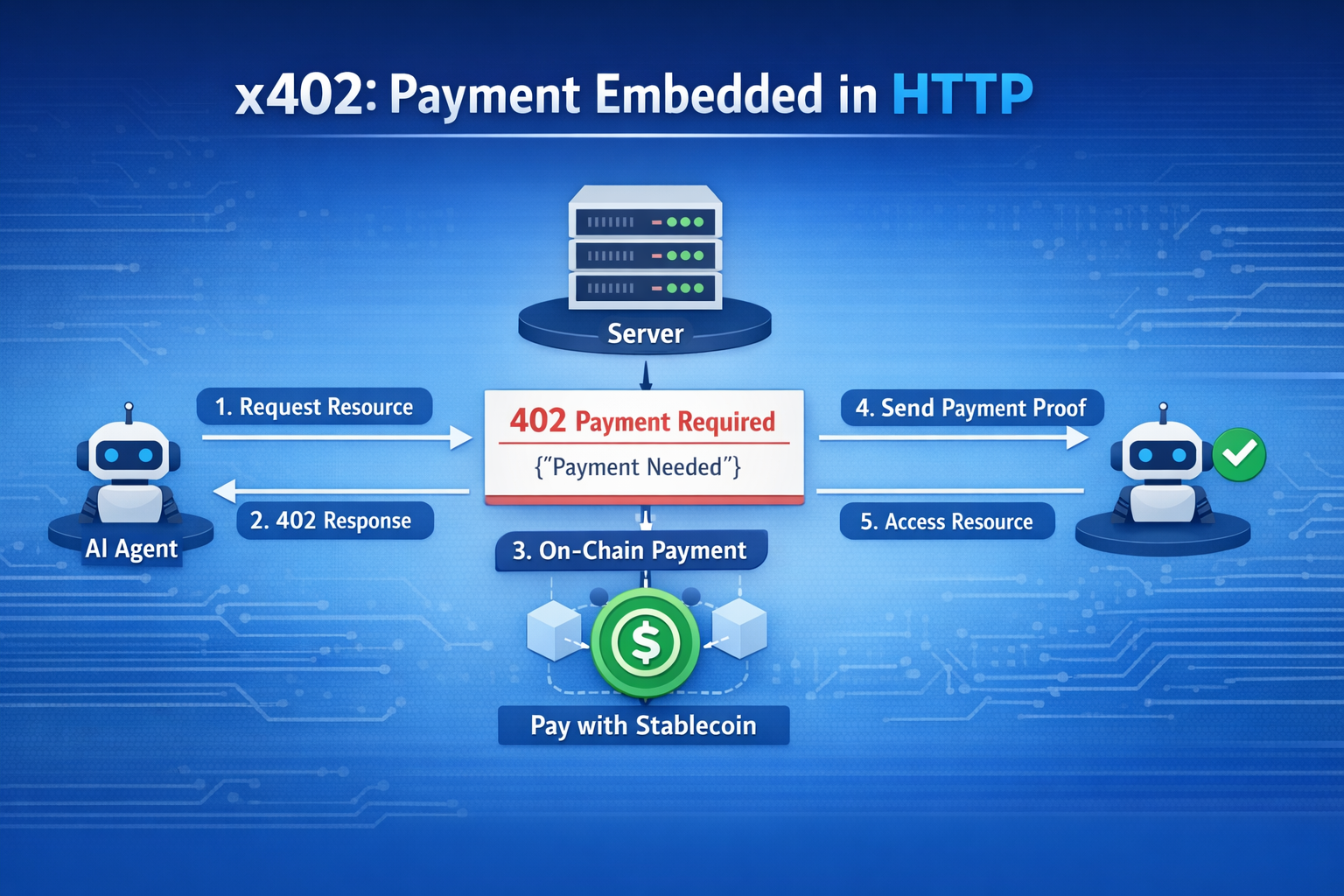
x402 is the most minimalistic and “purist” approach.
Its logic is direct: every request is a payment. When a client requests a resource, the server responds with an HTTP 402 status code, signaling a payment requirement. Once the client completes payment, it resubmits the request with proof.
Key characteristics of this approach include:
- No account system
- No intermediaries
- No permission mechanisms
- Pure on-chain settlement
This means payment is directly embedded into the internet protocol layer.
So far, x402 has processed more than 50 million transactions, with stablecoins comprising nearly 99% of the total. However, its main limitation is the narrow scope of commercial applications, with average transaction values remaining very low (around $0.20–$0.30).
As such, x402 resembles an “early internet protocol”—structurally sound, but still in an exploratory phase.
V. MPP: Payment as an Operating System
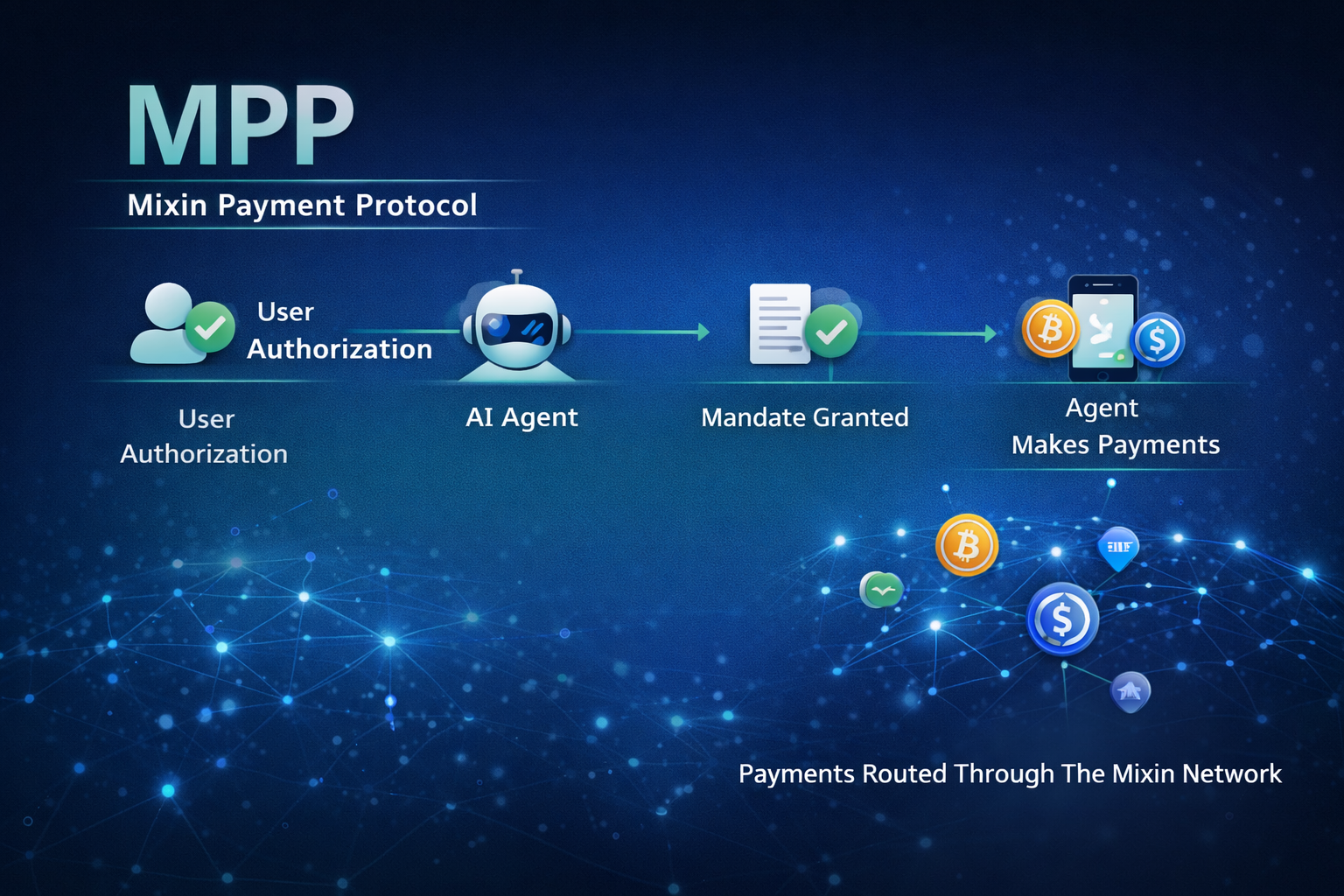
Unlike x402, MPP (Machine Payments Protocol) takes a systems-oriented approach.
Its key innovation is the introduction of a “session” mechanism. Traditional payments settle each transaction individually, but MPP restructures this process:
- Pre-authorize a spending amount
- Make ongoing payments within the session
- Settle collectively at the end
This mechanism shifts payment from per-transaction settlement to batch settlement, dramatically boosting efficiency.
MPP’s strengths are evident in three main areas:
- Supports high-frequency interactions, aligning with agent behavior
- Reduces on-chain transaction costs
- Enables hybrid payments using both fiat and crypto assets
Built on the dedicated payment chain Tempo, MPP can also interface with traditional card networks. It functions as more than a protocol—it is a full-fledged payment infrastructure.
Commercially, MPP is currently the most practical implementation path.
VI. AP2 and UCP: From Payments to Business Processes
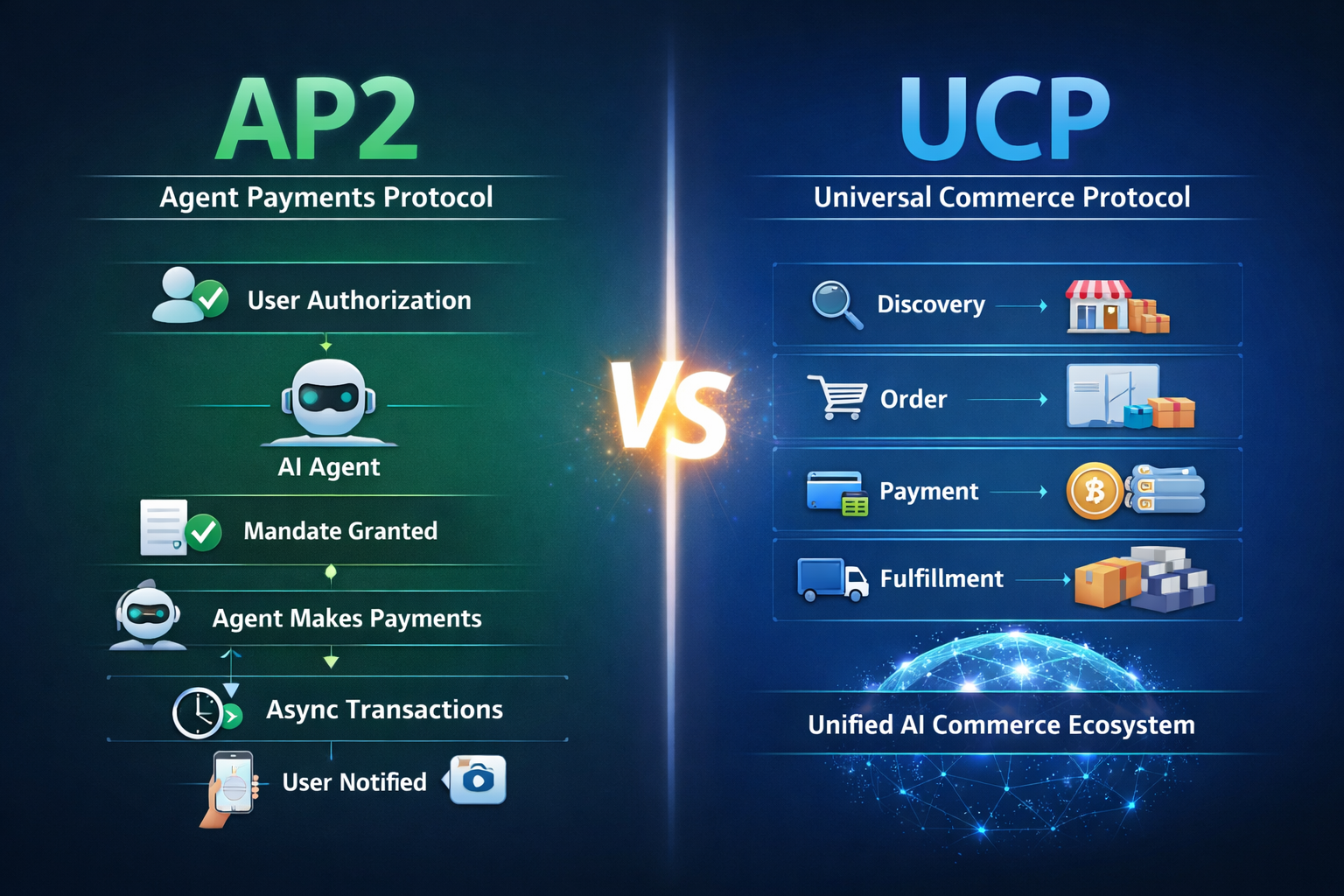
The platform layer takes things further. AP2 (Agent Payments Protocol) introduces a “mandate” mechanism, allowing users to authorize agents to make payments on their behalf, including asynchronous execution. This addresses the trust challenge of “machines acting for humans.”
Building on this, UCP (Universal Commerce Protocol) aims to integrate the entire business process, covering:
- Product discovery
- Order placement
- Payment
- Fulfillment
The goal is not just to optimize payments, but to build a comprehensive agent-driven commercial system.
In essence, UCP is an “AI e-commerce operating system.”
VII. Key Differences: Three Distinct Objective Functions
| Dimension |
x402 |
MPP |
AP2 |
UCP |
| Abstraction Level |
Protocol Layer |
System Layer |
Protocol + Authorization Layer |
Platform Layer |
| Core Design |
HTTP 402 Micropayments |
Session-Based Payments |
Mandate-Based Payments |
Standardized Business Process |
| Payment Model |
Pay per Request |
Continuous Session Payments |
Payments via Agent Authorization |
Unified Transaction Flow |
| Payment Assets |
Stablecoins (On-Chain) |
Stablecoins + Fiat |
Fiat + Stablecoins |
All Payment Methods |
| Platform Dependency |
No (Fully Open) |
Yes (Stripe Ecosystem) |
Partial Dependency |
High Dependency (Google Ecosystem) |
| Transaction Frequency Fit |
Low/Medium |
High |
Medium |
All Scenarios |
| Applicable Scenarios |
API/Data Market/Open Networks |
Enterprise/High-Frequency Agents |
Commercial Payment Agents |
E-Commerce/Platform Economy |
| Core Advantages |
Minimalist, Permissionless, Open |
High Performance, Scalable, Compliant |
Standardized Authorization, Secure |
Traffic Entry + Ecosystem Integration |
| Core Limitations |
No Risk Controls/No Fiat |
Centralization Dependency |
High Complexity |
Strong Platform Lock-In |
When viewed within the same framework, it’s clear that each path is defined by a distinct objective:
- x402: Pursues open networks
- MPP: Pursues efficiency and usability
- UCP: Pursues ecosystem integration and control
These differences ensure the approaches are complementary, not substitutes.
At a deeper level, true competition centers on three critical factors:
- Who controls the agent entry point
- Who manages transaction flow
- Who completes final settlement
VIII. 2026: The Dawn of Zero-Cost Transactions
The first quarter of 2026 marks a pivotal moment for AI agent payments.
Multiple major players are entering the market, accelerating infrastructure development. At the same time, a clear trend is emerging:
- Stablecoins are becoming the default payment medium
- Micropayments are becoming the mainstream use case
- Payment costs continue to fall
As payment costs approach zero, competition will shift from “Can you pay?” to “Is your payment route more efficient?”
IX. Future Structure: Layered Architecture Is Inevitable
Current trends point to a clear conclusion: AI agent payments will not yield a single winner.
A three-layered division of labor is the most likely outcome:
- Protocol Layer: Open networks (x402)
- System Layer: Efficiency and capability (MPP)
- Platform Layer: Entry points and rules (UCP / AP2)
This structure closely parallels the evolution of the internet itself.
X. Conclusion: Payment Is Only the Beginning—Structure Is the Key
The rise of AI agent payments is not just a “payment problem”—it signals an economic structural shift.
As AI evolves from tool to economic actor, payment is merely the first step toward market participation. What will shape the industry is not a single protocol or product, but how the entire system is layered and coordinated.
In the short term, MPP holds the greatest implementation advantage. Long term, x402 offers the most room for innovation. Ultimately, however, power will likely remain concentrated at the platform layer.
At its core, the next generation of the internet will compete not over “who enables payments,” but over:
- Who controls the entry point
- Who manages traffic
- Who completes settlement
These three factors will define the future power structure.