Across Protocol and ACX Token Background
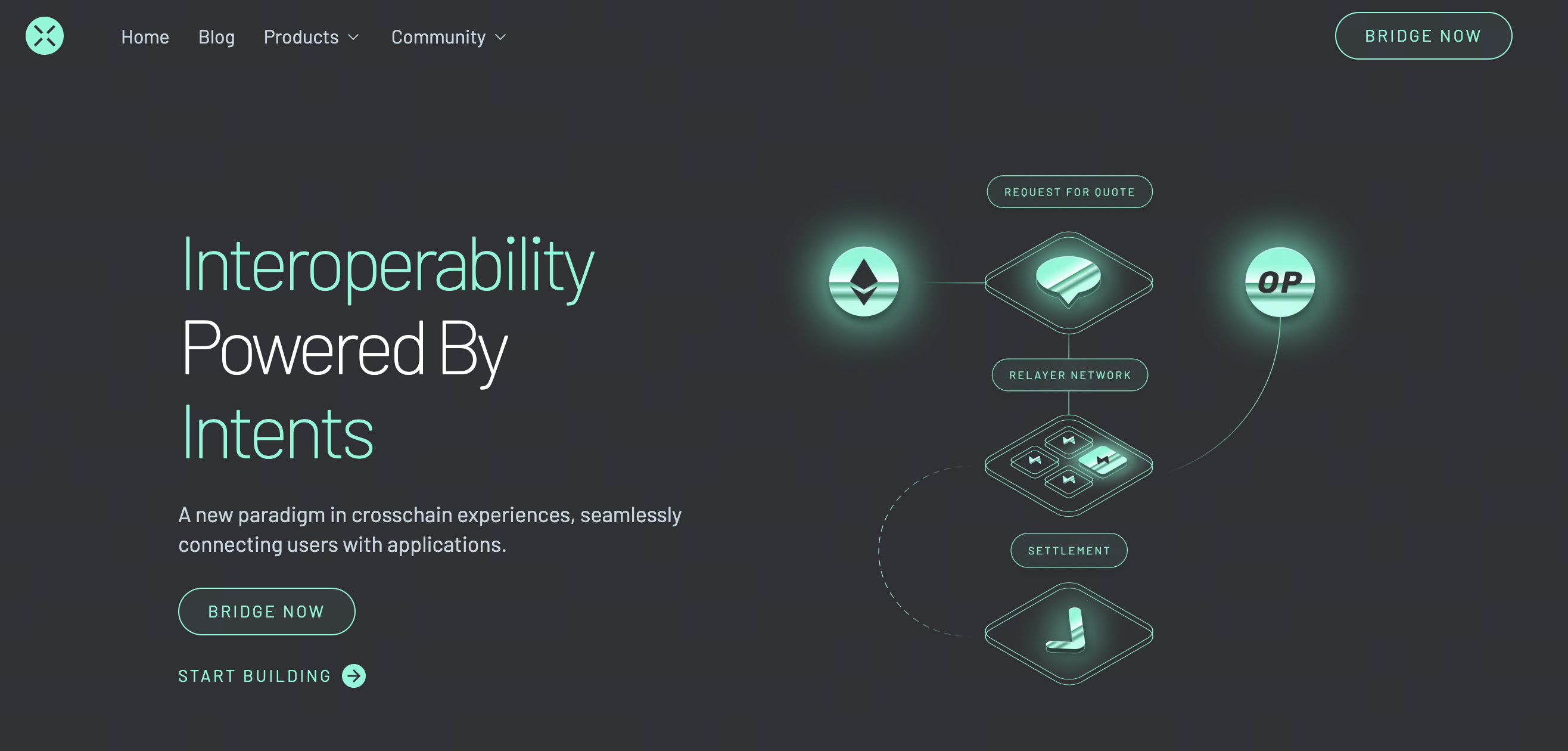 Image source: Across Official Website
Across Protocol is a cross-chain bridge infrastructure protocol designed to facilitate asset transfers and liquidity bridging between different blockchains. Its core objective is to improve cross-chain transfer efficiency and reduce costs by utilizing unified liquidity pools and a relay network.
The protocol was originally developed by the Risk Labs Foundation with support from leading crypto venture capital firm Paradigm. As the DeFi ecosystem expands, cross-chain infrastructure has become an essential component of the multi-chain landscape.
ACX serves as the native governance token of Across Protocol and is primarily used for:
- Protocol governance voting
- Incentivizing liquidity providers
- Paying certain protocol fees
- Participating in ecosystem incentive programs
Public data shows that the total supply of ACX is 1 billion tokens, with about 700 million currently in circulation.
However, like many DeFi projects, Across Protocol faces challenges such as DAO governance efficiency, business collaboration structures, and regulatory uncertainty. These factors have laid the groundwork for the current governance proposal.
DAO to Corporation: ACX Token-to-Equity Proposal Analysis
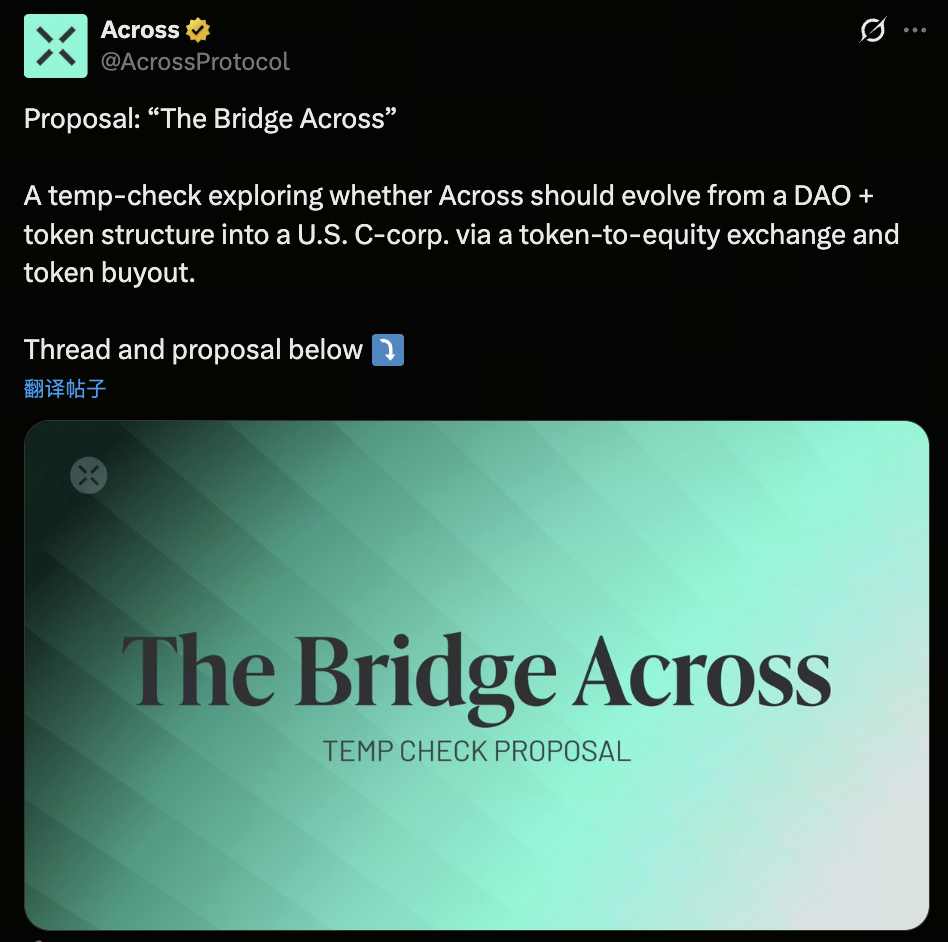 Image source: Across X Account
In March 2026, Across Protocol released a “temperature check” governance proposal to explore transforming its current DAO structure into a US C-Corporation.
Under this new structure:
- The new company will be named AcrossCo
- The company will become the protocol’s commercial operating entity
- The DAO structure may gradually shift toward a corporate governance framework
Most notably, the proposal allows ACX holders to exchange tokens for company equity at a 1:1 ratio.
This approach is rare in the crypto industry, as DeFi tokens and company equity have traditionally operated as entirely separate systems.
If approved, this would be one of the industry’s few clear examples of a Token-to-Equity conversion mechanism.
Proposal Details: 1:1 Equity Exchange and USDC Buyback Plan
According to the public proposal, ACX holders will have two options:
1. Token-to-Equity Exchange
ACX holders can choose to exchange their tokens for AcrossCo equity at a 1:1 ratio.
- Large holders may receive company shares directly
- Smaller holders may participate indirectly via a special purpose vehicle (SPV)
This structure is primarily designed to comply with US securities laws and share registration requirements.
2. USDC Buyback Exit
If holders do not wish to participate in the equity structure, they can opt to exit:
- Redeem at the 30-day average market price
- Receive payment in USDC stablecoin
- The exit window is expected to last 6 months
Reports indicate the buyback price may be set at a roughly 25% premium over the past 30-day average. This arrangement is intended to provide investors with liquidity and reduce governance disputes.
ACX Surges Nearly 100%: Why Did the Market React So Quickly?
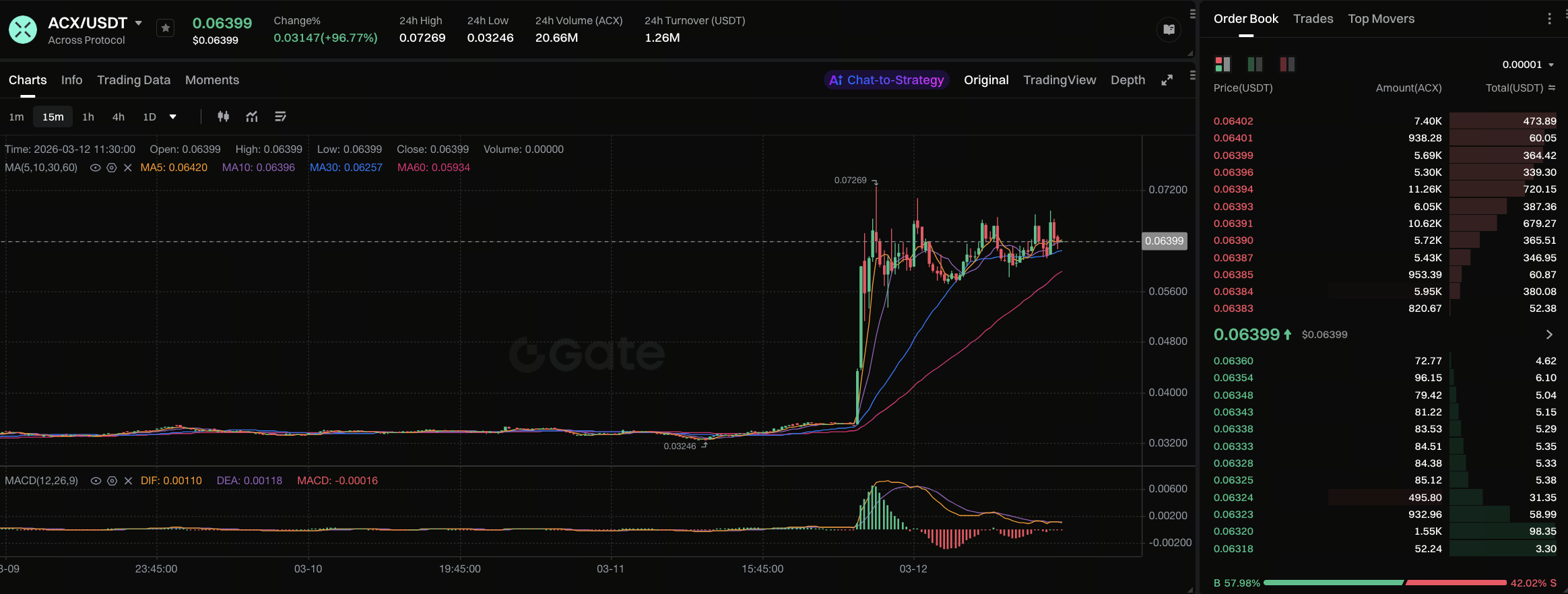
Following the proposal announcement, ACX’s price surged sharply, drawing significant market attention.
Gate market data shows:
- ACX rose by approximately 85%–100% within 24 hours
- The price peaked at around $0.06
- Open interest in the derivatives market also increased significantly
Several factors contributed to this price movement:
1. Anticipated Equity Value
If tokens can be exchanged for company equity, the market may reassess how ACX is valued: Token → Equity.
This means the token could represent not just a governance asset, but also a stake in company ownership.
2. Institutional Collaboration Expectations
The project team has stated that a corporate structure will help:
- Sign contracts with traditional enterprises
- Establish partnerships with institutions
- Enable commercial expansion
These steps are often challenging under a DAO structure.
3. Potential Arbitrage Opportunities
With a buyback price mechanism in place, some investors believe there may still be arbitrage opportunities at current market prices.
The Corporate Trend in DeFi Projects: Why Is This Structural Shift Happening?
Across Protocol’s proposal is not an isolated case. In recent years, the crypto industry has seen a growing trend of merging DAO and corporate structures, driven by several factors:
1. Regulatory Pressure
As global regulation intensifies, many DAOs face unclear legal status:
- Inability to sign contracts
- Inability to assume legal liability
- Difficulty accessing traditional financing
A corporate structure provides a clear legal entity.
2. Need for Business Collaboration
Many Web2 companies prefer working with corporations over DAOs.
Businesses typically require:
- Clearly defined legal entities
- Enforceable contracts
- Transparent equity structures
3. Capital Market Logic
Venture capital firms are more familiar with equity investment models.
While token models offer liquidity, they also:
- Feature complex valuation systems
- Have ambiguous rights structures
As a result, some projects are exploring hybrid Token + Equity structures.
Long-Term Impact on ACX Holders and the Across Ecosystem
If the proposal is approved, several significant changes could occur within the Across Protocol ecosystem.
1. Governance Model Shift
Current DAO governance may gradually transition to:
A board of directors and shareholder governance structure.
2. Token Role Diminishes
ACX may no longer be the sole value carrier.
In the future, there may be:
- Equity value
- Token utility value
A dual-track system.
3. Enhanced Ecosystem Commercialization
A corporate structure could drive:
- Enterprise-level cross-chain services
- Web3 business partnerships
- Institutional capital inflows
If successful, Across Protocol may upgrade from DeFi infrastructure to a cross-chain commercial platform.
Risks and Uncertainties: The Proposal Remains in the Governance Phase
Despite positive market sentiment, the proposal still faces several uncertainties.
Currently, this is just a temperature check phase.
A formal governance vote is expected after community feedback.
2. Legal and Regulatory Complexity
Token-to-equity conversion involves:
- Securities regulation
- Share registration
- Investor qualification
The implementation process may be complex.
3. Changes to the Token Economic Model
If a significant portion of tokens convert to equity:
ACX’s role in the market may change.
This could also affect its long-term liquidity and valuation logic.
Conclusion
Across Protocol’s ACX token-to-equity proposal offers a notable case study for the DeFi industry. The plan aims to address the limitations of the DAO model in real-world business and provide a new value pathway for token holders. ACX’s price nearly doubled following the announcement, reflecting the market’s strong interest in this innovative structure. However, whether the proposal can be successfully implemented and whether DAO and corporate models can truly merge remains to be seen.
If this approach proves viable, more DeFi projects may explore hybrid Token + Equity governance structures in the future, potentially marking a significant step for Web3 toward mainstream business integration.