This comprehensive analysis compares ZORA and ICP—two distinct Web3 platforms reshaping digital economies. ZORA, launched in June 2025, empowers creators through tokenized social content and on-chain monetization, while ICP (Internet Computer) offers decentralized cloud infrastructure since June 2019. The article examines historical price trends, tokenomics, institutional adoption, and technical ecosystems to guide investment decisions. ZORA targets the emerging creator economy with volatility ranging from $0.007755 to $0.148437, while ICP demonstrates higher liquidity with substantial historical corrections from $700.65. Through 2026-2031 forecasts, investment strategy frameworks, and detailed risk analysis, readers gain clarity on which platform aligns with their portfolio goals—whether prioritizing creator monetization trends or decentralized infrastructure development.
Introduction: ZORA vs ICP Investment Comparison
In the cryptocurrency market, the comparison between ZORA and ICP has become a topic of interest for investors. Both assets demonstrate distinct differences in market capitalization ranking, application scenarios, and price performance, representing different positioning within the crypto asset landscape.
ZORA: Launched in June 2025, this token focuses on empowering creators to transform themselves into tradable assets while enabling users to "own attention." Through its developer toolkit (SDK), ZORA allows internet developers to build and earn on its protocol.
ICP (Internet Computer): Operating since June 2019, ICP positions itself as a decentralized cloud blockchain capable of hosting secure applications, websites, and enterprise systems while supporting trustless multi-chain interactions. It also functions as a "self-writing cloud" where AI can create applications based on user instructions.
This article will analyze the investment value comparison between ZORA and ICP across multiple dimensions including historical price trends, supply mechanisms, institutional adoption, technical ecosystem, and future predictions, attempting to address investors' most pressing question:
"Which is the better buy right now?"
I. Historical Price Comparison and Current Market Status
ZORA and ICP Historical Price Trends
-
2025: ZORA reached its all-time high of $0.148437 in August 2025, followed by a decline. The token also recorded its historical low of $0.007755 in June 2025, showing significant price volatility during its initial market phase.
-
2021-2025: ICP experienced its all-time high of $700.65 in May 2021, representing a period of strong market performance. However, the token subsequently entered a prolonged downtrend, reaching its all-time low of $2.23 in October 2025.
-
Comparative Analysis: During the 2025 market cycle, ZORA demonstrated a more compressed price range, fluctuating between $0.007755 and $0.148437. In contrast, ICP showed a more dramatic price movement, declining from its peak of $700.65 to approximately $4.122, representing a substantial correction from its historical high.
Current Market Status (January 17, 2026)
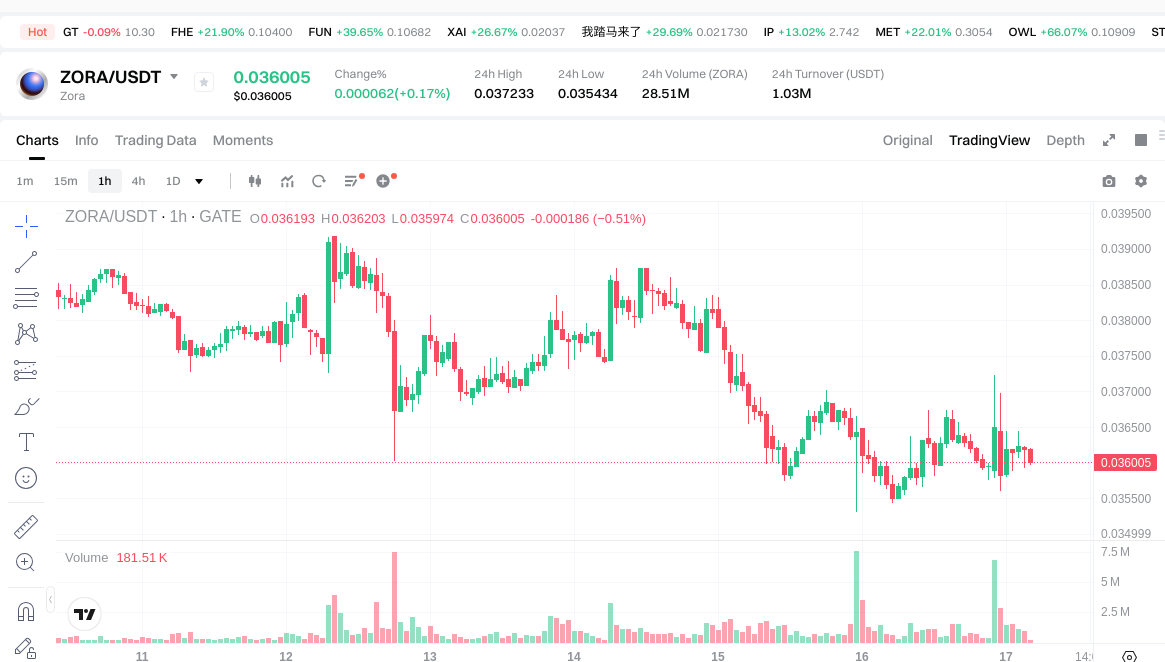
- ZORA Current Price: $0.036212
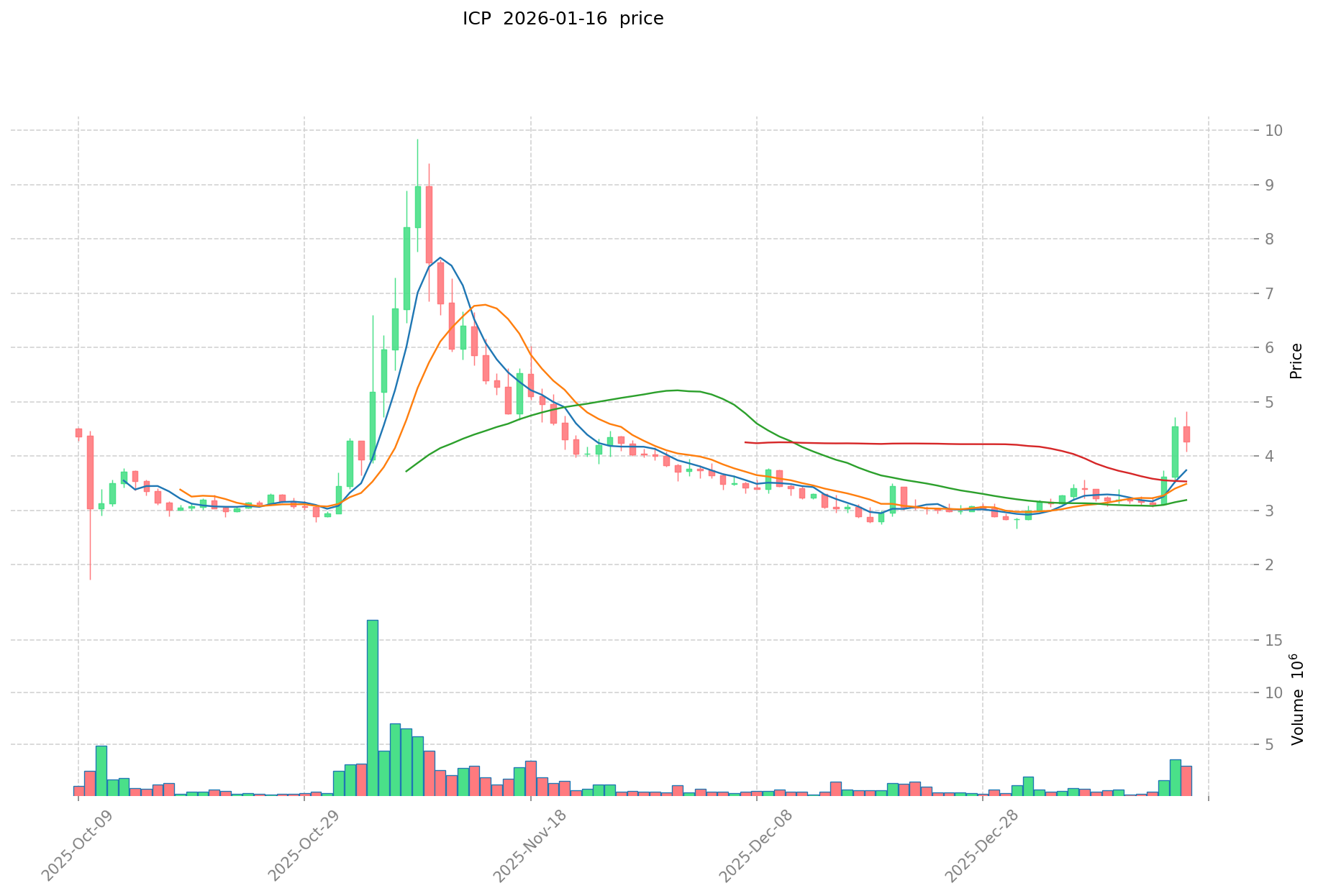
- ICP Current Price: $4.122
- 24-Hour Trading Volume: ZORA recorded $1,030,916.09 vs ICP recorded $8,092,067.06
- Market Sentiment Index (Fear & Greed Index): 49 (Neutral)
View real-time prices:
II. Core Factors Influencing ZORA vs ICP Investment Value
Tokenomics Comparison
-
ZORA: The project implements a creator-centric economic model where social content can be tokenized and traded. Posts and profiles are transformed into on-chain markets, with creators receiving compensation when transactions occur. This monetization mechanism aims to reduce friction in the value capture process.
-
ICP: Focuses on decentralized internet infrastructure with an economic model designed to support cloud service operations. The token structure supports its vision of reshaping digital economies through decentralized computing resources.
-
📌 Historical Pattern: Supply mechanisms and tokenomics design have historically influenced price cycles through changes in token velocity and utility demand.
Institutional Adoption and Market Application
-
Institutional Holdings: Both projects target different institutional segments. ZORA appeals to content platforms and social media applications seeking on-chain monetization solutions, while ICP targets enterprises looking for decentralized cloud infrastructure alternatives.
-
Enterprise Adoption: ZORA's application focuses on social content monetization and creator economy platforms. ICP positions itself as infrastructure for decentralized internet services, potentially serving broader enterprise computing needs.
-
Regulatory Environment: Both projects operate in evolving regulatory landscapes where clarity around digital content monetization and decentralized computing services continues to develop across jurisdictions.
Technology Development and Ecosystem Building
-
ZORA Technology: The platform emphasizes reducing monetization friction by converting social interactions into on-chain markets. The technical architecture supports tokenization of posts and profiles, enabling direct value capture from content creation.
-
ICP Technology: Focuses on decentralized internet infrastructure capabilities, aiming to provide alternatives to traditional cloud services. The technology development centers on supporting decentralized applications and services.
-
Ecosystem Comparison: ZORA concentrates on social content and creator economy applications, while ICP's ecosystem spans broader decentralized computing services. Both projects represent different approaches to reshaping digital economies.
Macroeconomic Factors and Market Cycles
-
Inflation Environment: Both assets belong to the digital asset category, which may exhibit different characteristics compared to traditional inflation hedges. Performance depends on adoption rates and utility demand rather than purely monetary policy responses.
-
Macroeconomic Policy: Interest rate changes and dollar index movements may affect risk appetite for digital assets generally. Both projects' valuations could be influenced by shifts in technology sector investment flows.
-
Geopolitical Factors: ZORA's social content focus may be influenced by platform regulation and content monetization policies. ICP's infrastructure positioning could be affected by discussions around decentralized internet services and data sovereignty considerations.
III. 2026-2031 Price Forecast: ZORA vs ICP
Short-term Forecast (2026)
- ZORA: Conservative 0.021-0.036 | Optimistic 0.036-0.047
- ICP: Conservative 3.26-4.08 | Optimistic 4.08-4.20
Medium-term Forecast (2028-2029)
- ZORA may enter a gradual growth phase, with projected price range of 0.038-0.081
- ICP may enter an expansion phase, with projected price range of 3.05-6.65
- Key drivers: institutional capital inflows, ETF developments, ecosystem expansion
Long-term Forecast (2030-2031)
- ZORA: Base scenario 0.056-0.071 | Optimistic scenario 0.062-0.073
- ICP: Base scenario 4.42-7.02 | Optimistic scenario 5.65-9.89
View detailed price predictions for ZORA and ICP
Disclaimer
ZORA:
| Year |
Predicted High Price |
Predicted Average Price |
Predicted Low Price |
Price Change |
| 2026 |
0.0467792 |
0.035984 |
0.02123056 |
0 |
| 2027 |
0.050485552 |
0.0413816 |
0.033932912 |
14 |
| 2028 |
0.06338833488 |
0.045933576 |
0.03812486808 |
26 |
| 2029 |
0.0814448236056 |
0.05466095544 |
0.0404491070256 |
50 |
| 2030 |
0.073497120684624 |
0.0680528895228 |
0.061928129465748 |
87 |
| 2031 |
0.072898255256823 |
0.070775005103712 |
0.056620004082969 |
95 |
ICP:
| Year |
Predicted High Price |
Predicted Average Price |
Predicted Low Price |
Price Change |
| 2026 |
4.2024 |
4.08 |
3.264 |
-1 |
| 2027 |
4.96944 |
4.1412 |
4.016964 |
0 |
| 2028 |
5.921916 |
4.55532 |
3.0520644 |
10 |
| 2029 |
6.65304486 |
5.238618 |
3.50987406 |
27 |
| 2030 |
8.0863307448 |
5.94583143 |
5.6485398585 |
44 |
| 2031 |
9.892674333234 |
7.0160810874 |
4.420131085062 |
70 |
IV. Investment Strategy Comparison: ZORA vs ICP
Long-term vs Short-term Investment Strategies
-
ZORA: Suitable for investors focused on creator economy growth and social content monetization trends. The platform's emphasis on transforming creators into tradable assets positions it for participants interested in emerging content monetization models.
-
ICP: Suitable for investors seeking exposure to decentralized cloud infrastructure development. The project's positioning as infrastructure for decentralized internet services may appeal to those interested in enterprise-grade blockchain solutions.
Risk Management and Asset Allocation
- Conservative Investors: ZORA 20-30% vs ICP 70-80%
- Aggressive Investors: ZORA 40-50% vs ICP 50-60%
- Hedging Tools: Stablecoin allocation, options strategies, cross-asset portfolio diversification
V. Potential Risk Comparison
Market Risk
-
ZORA: The token demonstrates significant price volatility, with historical data showing substantial fluctuations between $0.007755 and $0.148437 during 2025. Trading volume of $1,030,916.09 (as of January 17, 2026) reflects relatively modest market liquidity compared to more established assets.
-
ICP: Historical price movements indicate substantial volatility, declining from $700.65 in May 2021 to approximately $4.122. The token's 24-hour trading volume of $8,092,067.06 represents higher liquidity levels, though price volatility remains a consideration for investors.
Technical Risk
-
ZORA: Scalability considerations relate to the platform's ability to handle increasing volumes of tokenized social content and transactions. Network performance during high-activity periods requires monitoring as adoption grows.
-
ICP: Infrastructure complexity and network stability considerations relate to its positioning as decentralized cloud computing infrastructure. Technical challenges may arise in maintaining performance standards comparable to traditional cloud services.
Regulatory Risk
- Global regulatory frameworks affecting both projects differ based on their respective use cases. ZORA's social content monetization model may be influenced by evolving regulations around digital content platforms and creator compensation structures. ICP's infrastructure positioning may encounter considerations related to decentralized computing services and data handling across jurisdictions.
VI. Conclusion: Which Is the Better Buy?
📌 Investment Value Summary:
-
ZORA Advantages: Focuses on the growing creator economy sector with mechanisms for reducing monetization friction. The platform's social content tokenization model addresses emerging trends in content value capture.
-
ICP Advantages: Positions itself as decentralized internet infrastructure with broader enterprise application potential. The project targets established cloud computing markets with decentralized alternatives.
✅ Investment Recommendations:
-
Beginner Investors: Consider starting with smaller position sizes in either asset, prioritizing thorough research into each project's fundamentals, use cases, and risk profiles before committing capital.
-
Experienced Investors: May evaluate portfolio allocation strategies that balance exposure between creator economy applications (ZORA) and decentralized infrastructure (ICP), aligned with individual risk tolerance and sector outlook preferences.
-
Institutional Investors: Could assess both projects based on specific institutional mandates, considering factors such as liquidity requirements, regulatory considerations, and strategic positioning within digital asset portfolios.
⚠️ Risk Warning: The cryptocurrency market exhibits high volatility. This content does not constitute investment advice.
VII. FAQ
Q1: What are the key differences between ZORA and ICP's business models?
ZORA focuses on creator economy and social content monetization, enabling creators to transform themselves and their content into tradable on-chain assets. ICP positions itself as decentralized cloud infrastructure, providing alternatives to traditional cloud computing services for hosting applications, websites, and enterprise systems. ZORA targets content creators and social platforms seeking on-chain monetization solutions, while ICP serves enterprises requiring decentralized computing resources and internet infrastructure.
Q2: Which token has shown better price stability historically?
Based on historical data, neither token demonstrates strong price stability. ICP experienced extreme volatility, declining from $700.65 in May 2021 to approximately $4.122, representing significant correction. ZORA, launched in June 2025, fluctuated between $0.007755 and $0.148437 within months, showing compressed but volatile price movement. ICP's longer operational history provides more data points, but both assets exhibit characteristics typical of emerging digital assets with substantial price fluctuations.
Q3: What are the trading volume differences between ZORA and ICP?
As of January 17, 2026, ICP demonstrates significantly higher 24-hour trading volume at $8,092,067.06 compared to ZORA's $1,030,916.09. This approximately 8x difference reflects ICP's longer market presence since June 2019 and broader exchange listings. Higher trading volume generally indicates better liquidity, potentially allowing larger position entries and exits with less price impact, though this should not be interpreted as a quality indicator of the underlying projects.
Q4: How do the 2026-2031 price forecasts compare between ZORA and ICP?
For 2026, conservative forecasts project ZORA at $0.021-0.036 and ICP at $3.26-4.08. By 2031, base scenarios suggest ZORA could reach $0.056-0.071, while ICP may range between $4.42-7.02. The forecasts indicate ICP maintains higher absolute price levels, while ZORA shows percentage growth potential from its lower base. However, these projections depend on numerous variables including adoption rates, technological developments, and market conditions, and should not be interpreted as guaranteed outcomes.
Q5: What regulatory considerations affect ZORA versus ICP differently?
ZORA's social content monetization model may encounter regulations related to digital content platforms, creator compensation structures, and tokenization of social interactions. ICP's infrastructure positioning involves considerations around decentralized computing services, data sovereignty, and enterprise-grade blockchain solutions across jurisdictions. Both projects operate in evolving regulatory environments where frameworks for digital assets continue to develop, with specific implications varying based on their distinct use cases and target markets.
Q6: Which asset is more suitable for portfolio diversification purposes?
ZORA and ICP serve different diversification roles within digital asset portfolios. ZORA provides exposure to creator economy trends and social content tokenization, representing emerging monetization models. ICP offers exposure to decentralized infrastructure development, targeting established cloud computing markets. Conservative investors might consider higher ICP allocation (70-80%) versus ZORA (20-30%), while aggressive investors could balance positions at 50-60% ICP and 40-50% ZORA, depending on individual risk tolerance and sector outlook preferences.
Q7: What are the primary technical risks associated with each project?
ZORA faces scalability considerations related to handling increasing volumes of tokenized social content and transactions, particularly during high-activity periods as adoption grows. ICP encounters infrastructure complexity challenges in maintaining performance standards comparable to traditional cloud services while providing decentralized alternatives. Both projects must navigate technical challenges specific to their use cases—ZORA in social content processing and ZORA in enterprise-grade computing infrastructure—which could impact adoption rates and network performance.
Q8: How do institutional adoption patterns differ between ZORA and ICP?
ZORA appeals primarily to content platforms and social media applications seeking on-chain monetization solutions, targeting institutions in the creator economy sector. ICP targets enterprises requiring decentralized cloud infrastructure alternatives, potentially serving broader computing needs across various industries. The institutional adoption profiles reflect their distinct positioning: ZORA in content monetization infrastructure and ICP in decentralized internet services, with each attracting different institutional segments based on specific use case requirements and strategic priorities.
* The information is not intended to be and does not constitute financial advice or any other recommendation of any sort offered or endorsed by Gate.