The Complete Guide to the 2024 Bitcoin Halving. This guide details the halving mechanism, historical price movements from the previous four halvings, and examines the influence of ETFs and institutional investors following the fourth halving, as well as its connection to macroeconomic trends. It also features up-to-date on-chain data and market analysis available on platforms like Gate. This is a must-read resource for both beginner and intermediate cryptocurrency investors.
What Is the Bitcoin Halving?
The Bitcoin halving is a built-in protocol event where mining rewards (newly issued Bitcoin) are cut in half roughly every four years. This mechanism is fundamental to Bitcoin's design, ensuring a gradual supply reduction and guiding total issuance toward the ultimate cap of 21 million BTC.
Unlike fiat currency issued by central banks, the halving enforces a predictable, immutable supply schedule. This design guarantees Bitcoin’s scarcity and systematically lowers its inflation rate. Specifically, the reward miners receive for validating each block is reduced by 50% at every halving event.
For instance, the original block reward was 50 BTC. By the fourth halving in April 2024, it had dropped to 3.125 BTC. With blocks generated approximately every 10 minutes, the daily issuance also shrinks significantly. This “supply shock” alters Bitcoin’s supply-demand dynamics, and in theory, as scarcity increases, upward price pressure builds.
The halving also powerfully shapes market sentiment. As investors anticipate reduced issuance, bullish expectations often intensify around halving events, and in past cycles, significant price surges have followed.
Bitcoin Halving Overview
The following table details each Bitcoin halving to date.
| Event |
Date of Halving |
Block Height |
Block Reward (Before → After) |
Daily Issuance After Halving |
| 1st |
November 28, 2012 |
210,000 |
50 → 25 BTC |
Approx. 3,600 BTC/day |
| 2nd |
July 9, 2016 |
420,000 |
25 → 12.5 BTC |
Approx. 1,800 BTC/day |
| 3rd |
May 11, 2020 |
630,000 |
12.5 → 6.25 BTC |
Approx. 900 BTC/day |
| 4th |
April 20, 2024 |
840,000 |
6.25 → 3.125 BTC |
Approx. 450 BTC/day |
(Note: Daily issuance is estimated based on 144 blocks/day.)
Inflation Rate and Market Impact
Bitcoin’s annual inflation rate has fallen dramatically with each halving. Following the first halving in 2012, inflation was around 12%. It dropped to 4–5% in 2016 and to just 1.4% after the fourth halving in 2024. This rate is extremely low even compared to gold’s annual supply increase and is a key reason Bitcoin is often called “digital gold.”
Each halving reduces new supply, so if demand remains steady or increases, scarcity intensifies. Historically, anticipation of supply reduction has driven market psychology, and price surges have followed many halvings. However, both the timing and magnitude of those surges vary, depending on macroeconomic conditions, market maturity, regulation, and other external forces.
Is the Price Cycle Over?|Halving Effectiveness After 2024
After the 2024 halving, the classic “four-year cycle” in the Bitcoin market has become less clear-cut. Kaiko research notes that the usual surge “nine months after the halving” was absent this time—a break from historic patterns, hinting at structural market change.
While supply reductions still affect the supply-demand balance and remain a bullish driver, the rise of ETFs and market maturation have altered the pace, timing, and amplitude of price movements. ARK Invest found the 2022–2024 increase was roughly 5.7x, similar to prior cycles, but the time to peak and price volatility have both moderated.
Fidelity observes that “recent cycles are marked more by improved fundamentals—network health, investor diversification, infrastructure—than by explosive price gains.” This suggests Bitcoin is evolving from a speculative asset to a mature investment class.
Recent cycles’ main upside and downside figures:
| Cycle Period |
Max Upside (Low → High) |
Max Drawdown (High → Low) |
| 2015-2017 |
Approx. 5.2x |
-83% |
| 2018-2020 |
Approx. 5.9x |
-84% |
| 2022-2024 |
Approx. 5.7x |
-77% |
Bitcoin’s 60-day volatility has also shrunk significantly:
- 2012: Over 200%
- Recent years: About 50%
This sharp reduction in volatility signals a market shifting from speculation to stability. Institutional entry, regulatory progress, and deeper liquidity have all helped dampen price swings.
Bitwise notes, “Bitcoin tends to peak 100–400 days after a halving,” but this cycle, early ETF anticipation slowed the initial rally, with a stronger surge later. This reflects the transition from a retail-driven market to one led by institutions and long-term investors.
Macroeconomics and Monetary Policy Correlations
Bitcoin’s price is now closely tied to US Federal Reserve policies and the global economy. In 2022, it dropped in sync with tech stocks, but later, “decoupling” was seen as Bitcoin outperformed during periods of geopolitical or financial system stress.
Coinbase analysis highlights growing demand for Bitcoin as a diversification and hedge asset, increasingly breaking away from the traditional risk asset cycle. In 2024, US rate-cut expectations, regulatory easing, and ETF inflows all provided price support.
In this way, Bitcoin is shifting from a speculative instrument to a multi-dimensional asset responsive to macroeconomic shifts. At policy turning points or in crises, Bitcoin can diverge from traditional assets, boosting portfolio diversification.
ETFs and Institutional Investor Influence
Following the January 2024 approval of US spot Bitcoin ETFs, the market’s focus shifted from retail to institutional and pension fund capital. In the first three months, roughly $59.2 billion of new money flowed in, fundamentally changing supply-demand and price formation.
Institutions typically hold for the long term and are less reactive to short-term volatility—often buying more on downturns. This behavior reduces the risk of major panic selling and limits corrections.
Fidelity and ARK both note that “institutional entry has made prices more rational and stable.” In the past, emotional and speculative trading by individuals drove volatility; now, institutional presence is aligning prices with fundamentals.
As ETFs spread, traditional investors who previously couldn’t access crypto can now buy Bitcoin, broadening the investor base and strengthening the foundation for long-term growth.
Network Health Through On-Chain Data
On-chain metrics (MVRV ratio, long-term holder share, realized cap, etc.) remain effective for analyzing cycles. Glassnode observes, “Increasing sales by long-term holders can signal market tops,” and in both November 2021 and recent peaks, heightened movements from older addresses were seen.
Recent analyses show Bitcoin’s price cycles largely maintain their rhythm, but with some changes as the market grows. On-chain analyst Checkmate reports the 2022–2025 cycle features shallower drawdowns and faster, steadier recoveries than previous cycles.
This is attributed to the influx of capital from ETFs, institutions, and even governments, reinforcing market resilience. CryptoQuant CEO Ki Young Ju notes, “The recent Bitcoin market has shifted from whale and retail dominance to a diversified landscape including ETFs, corporations, institutions, and governments.”
Large ETF inflows help absorb the impact of big sales, fostering greater investor diversity and a more stable base. As a result, recent cycles are characterized by “steady growth and stronger support,” rather than dramatic swings.
Going forward, price formation will be driven by a mix of on-chain data, ETF flows, and traditional financial capital. Even if price cycles become less prominent, “strengthening the base,” “network expansion,” and “sticky long-term capital” continue to underpin Bitcoin’s long-term value proposition.
Since 2024, the Bitcoin market has matured into an asset class shaped by the interplay of halvings, ETF flows, institutional adoption, macroeconomics, and network health.
Price Action and Drivers for Each Halving
After each of the last three halvings, Bitcoin entered a bull market. However, the lead time until major rallies, as well as their magnitude and speed, varied widely—shaped by macro conditions, innovation, regulation, and other market-specific factors.
Below, we detail price action and key drivers before and after the 1st (2012), 2nd (2016), 3rd (2020), and 4th (2024) halvings. Understanding each cycle helps forecast future market behavior.
Bitcoin Price Action for Each Halving
The table below summarizes price action and main drivers for every halving event.
| Event |
Pre-Halving High |
Post-Halving Price |
Subsequent High |
Peak Timing |
Main Drivers |
| 1st |
~$12 |
~$13 |
~$1,150 |
Nov 2013 |
Exchange expansion, unregulated market |
| 2nd |
~$660 |
~$670 |
~$20,000 |
Dec 2017 |
ICO boom, global crypto fever |
| 3rd |
~$9,000 |
~$8,600 |
~$69,000 |
Nov 2021 |
Post-COVID easing, institutional entry, ETF expectations |
| 4th |
~$70,000 |
~$62,000 |
– |
After April 2024 |
US ETF approval, supply shock, macro shifts |
(Note: Post-halving trends for the 4th halving are ongoing.)
Each halving occurs under unique market and external conditions, resulting in different price patterns. Careful analysis of each cycle reveals the mechanisms by which halvings affect price.
1st Halving (Nov 2012): Explosive Growth and Volatility in an Emerging Market
On November 28, 2012, Bitcoin’s first halving reduced block rewards from 50 BTC to 25 BTC. The market was in its infancy, with price at about $12 per BTC pre-halving—a tiny market. Over the following year, Bitcoin exploded roughly 80-fold (peaking above $1,000), showcasing extraordinary growth.
In April 2013, amid the Cyprus financial crisis, the price shot past $260. After sharp pullbacks and volatility, Bitcoin closed November 2013 above $1,000 for the first time. These dramatic moves reflected both high volatility and rising global awareness.
Market Drivers and Context
Several factors fueled this rally. The halving’s supply reduction stoked scarcity expectations and growing trust in Bitcoin’s economic model. Built-in, predictable supply schedules attracted new investors.
Global financial instability, such as Cyprus, increased demand for Bitcoin as a “safe haven” outside the banking system. With tax proposals on deposits, trust in traditional finance waned—making Bitcoin’s decentralized nature attractive.
US Senate hearings, speculation in China, and surging media coverage further fueled the rally in 2013. Mainstream attention rapidly expanded the user base.
Subsequent Developments
In 2014, Mt. Gox’s collapse and new Chinese regulations caused an 80%+ price crash and a prolonged bear market (“crypto winter”). The failure of the largest exchange at the time severely damaged confidence.
Still, the cycle bottom remained well above pre-halving levels (around $200 vs. $12), establishing a higher price floor. This shows that, despite turmoil, Bitcoin’s fundamental value became increasingly recognized.
This cycle established Bitcoin’s “halving → surge → crash → higher floor” pattern, which has repeated and become a market hallmark.
1st Halving: Price Action and Main Drivers
| Period |
Price Level |
Key Events / Drivers |
| Pre-halving |
$12 |
Early-stage market, few participants |
| 1 year post-halving |
Over $1,000 |
Cyprus crisis, speculative inflows |
| Crash / Bottom |
~$200 |
Mt. Gox collapse, China regulation |
This period made Bitcoin’s scarcity and growth potential globally recognized, but also highlighted its extreme volatility. The first halving marked Bitcoin’s transition from technical experiment to investable asset.
2nd Halving (July 2016): Market Maturity and the ICO Boom
On July 9, 2016, the second halving cut rewards from 25 BTC to 12.5 BTC. The pre-halving price was around $650, reflecting a market recovering from the prior cycle’s long adjustment. Investors were more cautious and sophisticated than before.
The market turned bullish, and by the end of 2017, Bitcoin had exceeded $19,000—a 30x move in about 18 months—drawing global attention. This rally was driven not only by speculation, but also by expectations for blockchain technology at large.
Market Drivers and Context
The ICO Boom
2017 saw an explosion of ICOs (Initial Coin Offerings) on Ethereum. Many projects raised capital via ICO, and flows typically went through Bitcoin before reaching new tokens—driving up Bitcoin demand.
Advancing Regulation and Financial Products
Japan’s amended Payment Services Act made Bitcoin a legal payment method, spurring a surge in retail participation domestically and abroad. Japan led the way with legal recognition and exchange licensing.
In the US, Bitcoin futures launched on CME and CBOE, enabling institutional access and cementing Bitcoin’s status as a financial product.
Global Risk Appetite
2017 saw strong risk-asset performance, encouraging capital flows into crypto. Persistently low interest rates sent investors seeking higher-yielding emerging assets.
Subsequent Developments
After hitting $19,700 at the end of 2017, Bitcoin crashed over 80% (to the $3,000s) within a year as the ICO bubble burst, China tightened regulation, and the Fed hiked rates. Many ICOs proved hollow, forcing a major market correction.
Even so, the bottom remained far above pre-halving levels (above $600), and the long-term trend stayed intact. Despite the bubble, Bitcoin’s underlying value continued to rise.
2nd Halving: Price Action and Main Drivers
| Period |
Price Level |
Key Events / Drivers |
| Pre-halving |
$650 |
Post-correction, investor reentry |
| ~1 year post-halving |
$2,500 |
ICO boom, regulatory progress |
| Bubble peak |
$19,700 |
Financial product growth, risk-on sentiment |
| Crash / Bottom |
$3,000s |
Regulatory tightening, bubble burst |
The 2nd cycle was driven by market maturity and novel investment methods. However, the rapid rise was followed by a sharp correction, underscoring both the volatility and growth potential of the crypto market. This cycle reinforced the importance of risk management for all participants.
3rd Halving (May 2020): COVID Era and Institutional Entry
On May 11, 2020, the third halving reduced rewards from 12.5 BTC to 6.25 BTC. The pre-halving price was around $8,500, with little movement immediately afterward. But about six months later, a powerful bull market began: prices surpassed $60,000 in April 2021 and hit a record $69,000 in November 2021—an 8x gain from pre-halving levels.
Market Drivers and Context
Macroeconomic Shifts
The global spread of COVID-19 and subsequent recession in spring 2020 sparked financial market chaos. Central banks unleashed massive monetary easing, and Bitcoin attracted attention as an inflation hedge. As fiat currencies weakened, Bitcoin’s fixed supply solidified its status as “digital gold.”
Institutional and Corporate Entry
US companies like MicroStrategy and Tesla made large BTC purchases, and leading hedge funds and payment firms entered the market. MicroStrategy CEO Michael Saylor adopted Bitcoin as a primary treasury asset, buying billions and inspiring others to follow suit.
Technological Innovation and Public Interest
The DeFi and NFT booms brought new capital into crypto. DeFi protocols recreated traditional finance on-chain, generating new investment opportunities. In 2021, El Salvador adopted Bitcoin as legal tender, further boosting recognition.
Subsequent Developments
After the November 2021 peak, Bitcoin fell to the $15,000s by end-2022 (a 77% drawdown), hit by Fed rate hikes, crypto firm collapses, and the Terra/LUNA meltdown, which exposed the risks of algorithmic stablecoins and shook the entire sector.
Still, the post-crash low remained well above pre-halving levels (above $8,000), a testament to growing institutional support and market resilience.
Key Features and Changes
Both gains and drawdowns moderated, showing greater maturity and institutional influence. Bitcoin became more correlated with traditional finance and macro trends, evolving from an individual-driven asset to a global investment class. This transition means Bitcoin is now a core portfolio asset—not just a speculative bet.
3rd Halving: Price Action and Main Drivers
| Period |
Price Level |
Key Events / Drivers |
| Pre-halving |
$8,500 |
Post-COVID, monetary easing |
| ~6 months post-halving |
$20,000 |
Institutional entry, start of major rally |
| All-time high |
$69,000 |
Corporate/national adoption, NFT/DeFi boom |
| Crash / Bottom |
$15,000s |
Monetary tightening, sector credit risks |
The 3rd cycle fused “COVID and easing,” “institutional entry,” and “new technology,” crystallizing a new market paradigm. Volatility remained high, but market depth and long-term growth became widely recognized. Through this cycle, Bitcoin became an accepted part of the traditional financial system.
4th Halving (April 2024) and the Latest Market Trends
On April 20, 2024, Bitcoin’s fourth halving cut rewards from 6.25 BTC to 3.125 BTC. For the first time ever, Bitcoin reached a new all-time high ($73,800) just before the halving and remained above $63,000 during the event—a stark contrast to past cycles. This time, the price surge preceded the halving, not followed it.
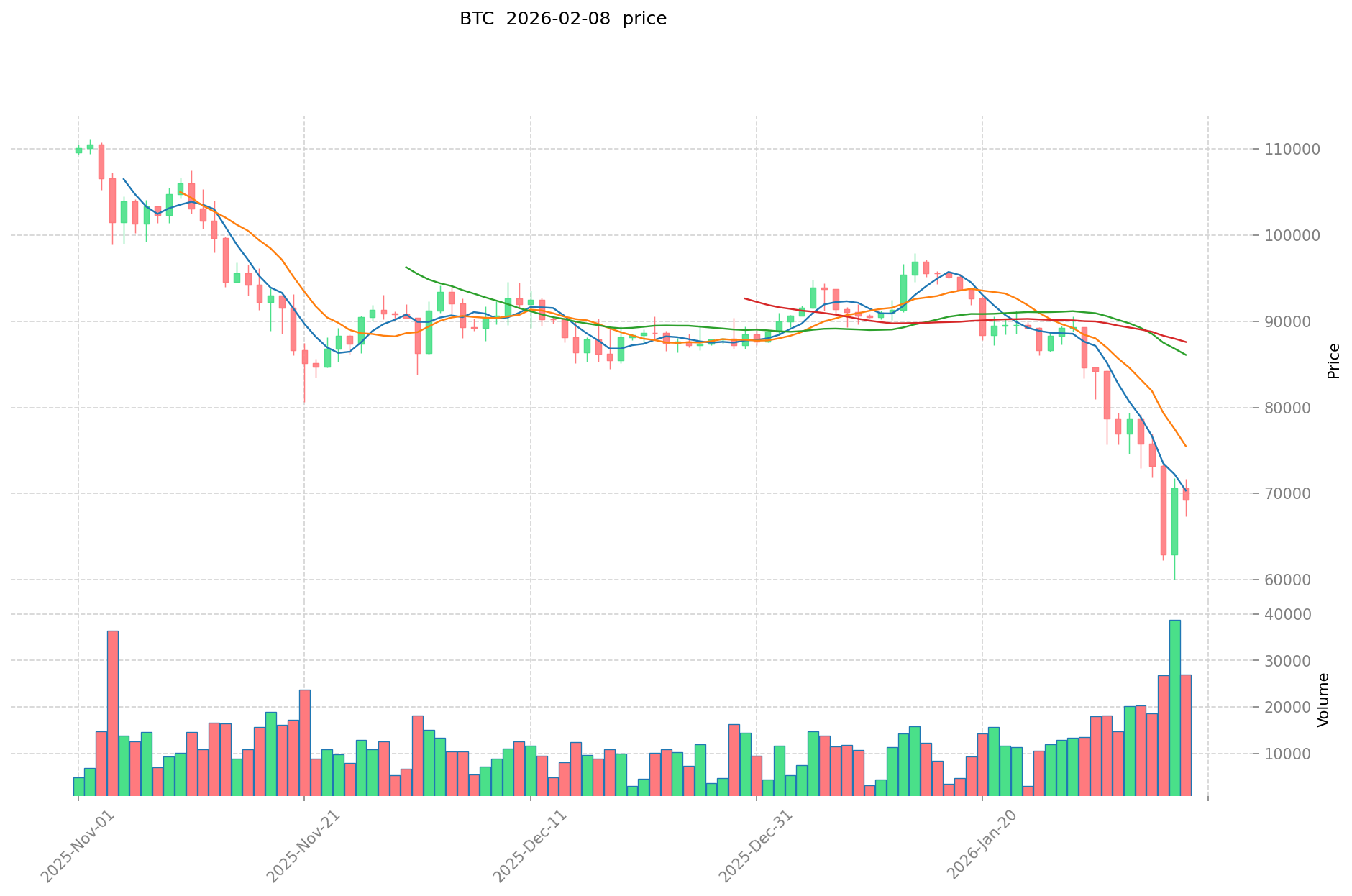
Leading up to the halving, US approval of spot Bitcoin ETFs triggered massive institutional inflows. ETF launches brought in about $59.2 billion in three months, fundamentally altering supply-demand dynamics. Immediately after the halving, the price dipped into the high $50,000s on “buy the rumor, sell the news,” but rebounded on ETF and long-term investor buying, recently notching a new high at $111,000.
Key Timeline and Market Environment
The table below summarizes major events and price action around the 4th halving.
| Period / Event |
Market Environment / Price Action |
| Late 2023 |
Bullish sentiment grows on BlackRock and other spot ETF filings |
| Jan 2024 |
SEC approves first spot ETF; BTC nearly doubles in months |
| Mar 2024 |
New all-time high at $73,800 |
| Apr 20, 2024 |
Halving event; short-term correction follows |
| Summer–Fall 2024 |
Lower bound holds in the $50,000s amid easing and ETF inflows |
| Oct–Dec 2024 |
US election, regulatory optimism, BTC tops $100,000 |
| Jan 2025 |
All-time high at $109,000, then correction |
| Spring–Early Summer 2025 |
Tariff shock triggers drop, but BTC recovers to $105,000 by June |
Market Structure and Factor Analysis
Supply-Demand Transformation
The halving’s supply cut, combined with ETF-driven institutional flows, means “ETF capital” now dominates price formation. ETF-based investing is typically long-term, supporting market stability versus prior exchange-driven retail flows.
Macro and Policy Factors
Despite headwinds from inflation and high rates, prospects for US monetary easing and regulatory relief provided a floor. Policy shifts—especially regulatory improvements—lifted sentiment and supported prices.
Market Sentiment and Investor Behavior
Both retail and institutions entered the market on all-time highs and ETF effects. While profit-taking and corrections occurred, long-term ETF capital has increasingly supported the price floor, reducing the risk of sudden crashes.
New Trends and What to Watch Next
Several new trends are emerging in the post-4th halving market:
-
Market leadership shifting from retail to institutions, governments, and long-term investors: The market is now dominated by a diverse mix beyond individual traders.
-
Rising Bitcoin dominance, relative weakness in altcoins: Bitcoin’s market share has climbed, while altcoin inflows remain limited.
-
Network robustness and decentralization strengthening: Hashrate and node count are rising, further securing and decentralizing the network.
-
“Halving + ETF + policy” now jointly shape cycles: Multiple factors, not any single one, determine market trends.
-
Macro, policy, and ETF capital are key to future price action: Market analysis now requires synthesizing all of these.
The fourth cycle is defined by the interplay of a supply shock, ETF introduction, policy change, regulatory optimism, and macro shifts. Going forward, holistic analysis of ETF flows, policy, and global economics will be essential for understanding the Bitcoin market.
Summary: A New Cycle Driven by Institutional Entry
Historically, Bitcoin’s price has been shaped by its roughly four-year halving schedule. While past halvings always reduced supply and eventually drove prices higher, today’s market structure is far more complex—no longer explained by the “halving cycle” alone.
ETF approvals brought in institutional capital, while global monetary policy and macro trends now shape price formation. As the market matures, the halving remains important, but its impact is more nuanced and multi-dimensional.
In previous cycles, price spikes after halvings were often followed by sharp corrections. After the fourth halving, ETF inflows have moderated volatility and enabled more stable growth.
Going forward, investors will need to consider not only the halving but also ETFs, policy, and on-chain data. Bitcoin has evolved into a mature asset class, and long-term strategies are more important than ever.
Institutional entry has boosted liquidity and stability, and Bitcoin is now recognized as part of the traditional financial system. While halvings will continue to impact supply and price, they no longer tell the whole story.
Investors should analyze the market from multiple perspectives—including halving cycles, macro conditions, regulation, innovation, and institutional trends. The Bitcoin market will continue to evolve, attracting a broader investor base and cementing its role as a global asset class.
FAQ
What is the Bitcoin halving? Why does it occur every four years?
The Bitcoin halving is an event triggered every 210,000 blocks—about every four years—where mining rewards are cut in half. This mechanism controls supply, enhances scarcity, and curbs inflation. The most recent halving in April 2024 dropped rewards to 3.125 BTC.
How many Bitcoin halvings have there been? When did they occur?
There have been four Bitcoin halvings: November 2012, July 2016, May 2020, and May 2024. The next is expected around 2028.
How does the Bitcoin halving affect price? Have prices always risen after past halvings?
Historically, Bitcoin halvings have led to price surges. Each halving in 2012, 2016, and 2020 was followed by substantial increases, as reduced supply increased scarcity and drove demand. However, sentiment and external factors also influence price action.
Did the price cycle end after the 2024 Bitcoin halving?
The price cycle may not be over after the 2024 halving. Broader institutional participation and macro factors have altered the traditional four-year rhythm. Institutions now lead the cycle, retail participation is lower, and the outlook remains uncertain.
What is the relationship between Bitcoin halvings and price cycles? Can halvings be used to predict future moves?
Bitcoin’s supply halves every four years, and historically prices peaked 12–18 months after a halving. The 2026 halving will likely impact the long-term trend, and many analysts forecast $200,000–$300,000 price targets. However, halvings alone are not a perfect predictor.
When is the next Bitcoin halving? What’s the expected timing?
The next halving is expected in 2028. Bitcoin undergoes a halving about every four years, reducing mining rewards by half. The actual date is determined by block height, so the timing is an estimate.
* The information is not intended to be and does not constitute financial advice or any other recommendation of any sort offered or endorsed by Gate.