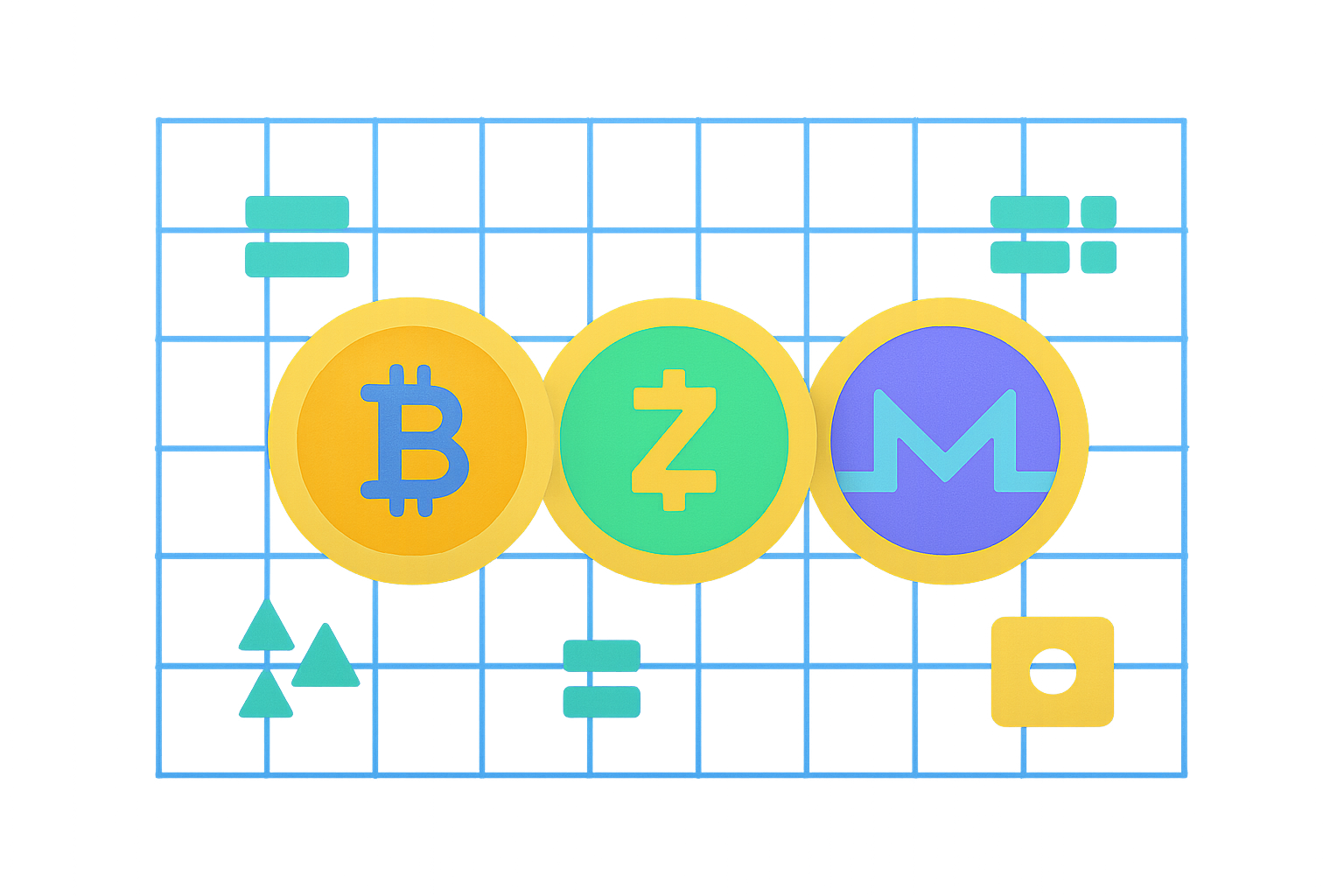
The definitive guide to launching ASIC mining from home. Tailored for beginners, it covers how to choose hardware, calculate profitability, and select recommended coins—including ZCash and Monero. The guide thoroughly explains the advantages of joining mining pools, offers tips to control electricity expenses, and walks you through practical, step-by-step setup procedures.
Cryptocurrency Mining: An Overview
In the cryptocurrency sector, “mining” most often refers to Bitcoin mining. However, this term also broadly encompasses the mining processes for various other cryptocurrencies beyond Bitcoin.
In simple terms, Bitcoin mining is the process of running complex mathematical computations to validate transactions and earn new asset units as a reward. This mechanism is fundamental to blockchain technology.
Mining involves verifying and confirming transactions before adding them to the Bitcoin blockchain, playing a critical role in the broader crypto asset ecosystem. Transactions are grouped into “blocks,” and once a block is validated and confirmed, its transactions are permanently recorded on the Bitcoin blockchain. Miners are incentivized through the distribution of transaction fees.
While the concept may seem straightforward, the actual process is highly complex. Successfully earning new Bitcoin requires completing intricate tasks, primarily solving advanced mathematical equations. This is known as Proof of Work (PoW), and it is essential for maintaining network security.
To keep pace with technological change and rising competition, miners have developed advanced mining hardware and tools to dramatically increase processing speeds. In Bitcoin’s early days, ordinary computers could be used for mining. Today, however, mining Bitcoin at home using a regular PC is virtually impossible. As mining difficulty has increased, individual entry barriers have grown much higher. Even so, it remains possible to mine other cryptocurrencies at home with specialized equipment.
Efficient mining demands massive computational power, which standard PCs cannot provide. Today’s mining industry relies on Graphics Processing Units (GPUs) and Application-Specific Integrated Circuits (ASICs). These devices deliver greater computational capacity and higher odds of block validation, but their upfront costs are significant. The higher the hash rate, the greater the mining efficiency and the potential for earning rewards.
Types of Cryptocurrency Mining
Mining comes in several forms, each with unique features, advantages, and drawbacks. The following are the primary mining methods.
CPU Mining
CPU mining was the standard approach in the early days of cryptocurrency. It uses a computer’s central processing unit (CPU) to perform mining operations. This was how Bitcoin was commonly mined in its initial phase.
Nowadays, dramatically increased mining difficulty has rendered CPU mining highly inefficient and unprofitable, especially when accounting for electricity and other costs. As a result, CPU mining is rarely chosen today.
GPU Mining
GPU mining is currently one of the most popular mining methods. It utilizes a computer’s graphics processing unit (GPU), which is far superior to CPUs in terms of parallel processing, allowing for efficient mining computations.
Compared to ASIC mining, GPU mining typically requires less upfront investment. GPUs are multifunctional and can be used for tasks beyond mining, making them an attractive choice for risk diversification. However, building a “mining rig” that combines multiple GPUs for mining requires some capital and technical expertise.
ASIC Mining
ASIC mining represents the highest level of mining efficiency. ASICs are purpose-built devices designed exclusively for mining, delivering unmatched computational power.
These machines are the most effective mining tools available and are the backbone of large mining farms. However, both acquisition and operational costs are steep, making ASICs impractical for individual investors unless they have access to cheap electricity in cold climates. ASICs are also tailored to specific cryptocurrencies, limiting their versatility.
Mining Pools
If high equipment costs and electricity bills are prohibitive, multi-algorithm mining pools offer an appealing alternative.
Mining pools are platforms where individual miners combine their resources to mine collectively. Pool mining is more efficient and yields more consistent rewards than solo mining, making it especially accessible for newcomers.
Within the pool, miners aggregate their computing power to discover blocks and verify transactions more rapidly. When a pool mines a block, rewards are distributed to members according to their proportional contribution, typically based on hash rate.
Mining pools also limit risk. While solo mining can theoretically be more profitable, intense competition means it can take a long time to receive significant rewards. For coins like Bitcoin with high mining difficulty, pools are a smart choice. If you want steady income, joining a pool is highly recommended.
Cloud Mining
Cloud mining is a recent development in the mining landscape. It allows users to pay a fee to service providers—often large companies—to “rent” access to remote mining rigs.
During the rental period, the provider sends a portion of the mined rewards to the user’s wallet at regular intervals. Most cloud mining companies operate numerous rigs managed by skilled technicians, so users only need to pay the contract fee, with no further involvement required.
Like mining pools, cloud mining’s main advantage is its low entry cost. There’s no need for equipment purchases or ongoing expenses like electricity and cooling. No technical expertise is required, so anyone can easily participate in cryptocurrency mining. However, choosing a reputable provider and thoroughly reviewing contract terms is crucial.
Requirements for Mining Bitcoin at Home
If you opt for GPU or ASIC mining, you’ll need to acquire and set up the appropriate equipment at home. Generally, getting started with mining involves the following steps and preparations.
Calculating Mining Profitability
After selecting the cryptocurrency to mine, conduct in-depth research and calculations to ensure the asset is valuable and can generate profit. Mining profitability typically depends on:
- Current reward system: Number of tokens earned through mining
- Miner hash rate: Computational capacity of your mining hardware
- Mining difficulty: Numeric value reflecting the current challenge of mining, based on active power in the ecosystem
- Electricity cost: Price per kilowatt-hour, which varies by region
- Power consumption: Wattage of your mining devices
- Pool fees: Fees incurred when mining via a pool
- Asset price: The cryptocurrency’s market price compared to your revenue and total expenses
Consider all these factors, and use online profitability calculators to simulate potential earnings before you begin.
Sourcing a Miner
Once profitability is calculated, purchase your mining equipment. Use review websites and industry forums to select the best miner for your budget and goals. Popular mining hardware includes:
- Bitmain Antminer S19 Pro: 110 TH/s hash rate, 3,250W power consumption
- MicroBT M30S++: 112 TH/s hash rate, 3,472W power consumption
- Bitmain Antminer T19: 84 TH/s hash rate, 3,150W power consumption
These devices offer high performance but come with steep price tags. Carefully evaluate payback periods and long-term profitability before investing.
Setting Up a Wallet
To securely receive mining rewards, set up a highly secure wallet. Prepare a compatible wallet for your chosen cryptocurrency, such as a hardware wallet or air-gapped wallet. Once you contribute to block verification and are approved, rewards will be sent automatically to your wallet.
Wallet security is paramount. Safeguard your private keys and recovery phrases, and never share them with anyone.
Joining a Mining Pool
For mainstream cryptocurrencies like Bitcoin, joining a mining pool is strongly recommended. Solo mining offers a very low probability of discovering blocks, making stable income difficult. When choosing a pool, focus on:
- Reward distribution methods (PPS, PPLNS, etc.)
- Mining and withdrawal fee structure
- Block discovery frequency, pool performance, and reliability
- Ease of withdrawals and minimum withdrawal amounts
- Pool stability and transparency (e.g., dashboard usability)
Choosing a reputable pool increases your chances of earning consistent rewards.
Choosing Mining Software
Finally, you’ll need mining software to control your mining processes and manage pool communications. Some pools provide proprietary software, while others do not. Most mining software is free, so additional costs are minimal.
Popular options include CGMiner, BFGMiner, and EasyMiner. Select software that matches your system and preferences, configure it, and you’re ready to start mining.
What Is the Bitcoin Halving?
The Bitcoin halving is a major event that occurs approximately every four years, drastically impacting Bitcoin’s supply. During each halving, the BTC reward for mining new blocks is reduced by half. This limits the flow of new Bitcoin and supports further network decentralization.
As a result, Bitcoin becomes more resistant to inflation, and miners become less dependent on block rewards for income. Following a halving, miner revenue gradually shifts from block rewards to transaction fees—marking a strategic inflection point for the Bitcoin ecosystem.
Bitcoin Halving and Investment Strategies
The effects of the halving extend beyond technology, making it a focal event for crypto market participants and investors. Historically, halvings have been associated with significant price volatility before and after the event.
Investors can position themselves strategically for the halving to maximize opportunities in the crypto market. However, past performance does not guarantee future results, so careful judgment is required.
Top Cryptocurrencies for Home Mining
Here is a closer look at cryptocurrencies suitable for home mining.
The most important point is that mining Bitcoin profitably on a standard home computer is virtually impossible today. Mining difficulty has risen each year, and large-scale farms with dozens of ASIC devices dominate the space, leaving ordinary computers unable to compete.
Currently, what’s often called “home Bitcoin mining” usually involves mining other cryptocurrencies and exchanging them for Bitcoin. This is known as “multipool mining,” which automatically selects the most profitable coins to mine.
That said, there are several cryptocurrencies besides Bitcoin that can be mined at home, as detailed below.
1. ZCash
ZCash is a privacy-centric digital asset that has operated since 2016, favored by users seeking transaction anonymity.
For home miners, ZCash is attractive because it is GPU-mineable. Using the Equihash algorithm, ZCash resists ASIC dominance—allowing individuals to mine with affordable GPUs rather than costly ASICs.
To mine ZCash, you’ll need dedicated mining software, the ZCash blockchain, and a wallet. ZEC is widely listed on major exchanges, offering good liquidity.
2. Ether
Ether, Ethereum’s native token, is the world’s second-largest cryptocurrency by market cap. It’s highly liquid and has seen sustained price appreciation. With a powerful GPU, home mining is possible.
For efficient mining, joining a pool is recommended, as solo block discovery is subject to luck and time. Pools stabilize earnings.
Note: Ethereum has already transitioned to Proof of Stake (PoS), ending traditional Proof of Work mining. For long-term mining, consider other assets.
3. Monero
Monero, like ZCash, is privacy-focused and commands a multi-billion dollar market and high liquidity, making it the leading privacy coin.
Monero’s key advantage is its use of the CryptoNote hash algorithm, which discourages Monero-specific ASICs. This means home miners can use CPUs or GPUs, and even high-performance CPUs are effective—a unique feature among major cryptocurrencies.
Monero mining is also easy to set up. The wallet’s GUI version allows beginners to start mining without complex configuration, making Monero an ideal choice for newcomers due to its low technical barriers.
Can Mining Still Be Profitable?
With the right strategy and environment, cryptocurrency mining remains potentially lucrative. While Bitcoin mining is the most widely known, there are many other compelling options.
Home mining is feasible, but carefully consider which asset to mine and the investment required for setup. Success depends on evaluating all variables: electricity costs, equipment, cooling, and more.
If you have ample capital and access to cheap power, building a sophisticated Bitcoin mining environment is recommended. If not, consider pool mining or mining alternatives such as ZCash or Monero.
The key is thorough research and careful profitability calculations before starting. Cryptocurrency markets are volatile, so manage risk strictly and only invest surplus funds.
FAQ
Is Home Bitcoin Mining Profitable?
Profitability for home Bitcoin mining is very low. Electricity and hardware costs are high, and increased mining difficulty greatly reduces returns. Recouping your investment is unlikely.
What Equipment and Initial Investment Are Required for Bitcoin Mining?
Minimum investment is about ¥4,200,000. You’ll need dedicated mining machines, high-grade GPUs, and cooling systems. Upfront costs are high, but ongoing income is possible.
How Does Home Mining Differ from Large-Scale Mining Facilities?
Main differences are electricity costs and profitability. Large facilities operate with cheap electricity contracts, while home miners pay higher rates and face lower profitability. The scale of equipment and cooling infrastructure is also much greater in large facilities.
What Are the Electricity Costs for Home Mining?
Electricity costs depend on device power consumption. For a 2,000W device, costs run about ¥44,640 per hour. Choosing efficient hardware can help reduce expenses.
Is Bitcoin Mining Illegal?
Bitcoin mining is legal. It’s a legitimate process for transaction verification. However, you must comply with tax laws, and regulations differ by country.
Is Individual Mining Feasible Given Current Bitcoin Difficulty?
Solo mining is not feasible. Difficulty is extremely high, and large farms benefit from lower power costs, making individual mining unprofitable. Joining a mining pool is recommended for stable returns.
* The information is not intended to be and does not constitute financial advice or any other recommendation of any sort offered or endorsed by Gate.