This comprehensive investment guide compares AMP and BNB cryptocurrencies across multiple dimensions including historical price trends, market capitalization, and technological ecosystems. As of January 2026, BNB maintains superior market position with $126.99 billion market cap versus AMP's $186.35 million, while demonstrating stronger price resilience and institutional adoption. The analysis examines BNB's deflationary tokenomics and diverse ecosystem utility against AMP's focus on payment infrastructure collateral mechanisms. Price forecasts through 2031 project BNB reaching $2,345.91-$2,730.40 in optimistic scenarios, while AMP ranges $0.003809-$0.005228. Conservative investors should allocate 15-25% to BNB versus 5-10% to AMP within cryptocurrency portfolios. Both tokens carry distinct risks including regulatory pressure and market volatility, requiring thorough due diligence before investment decisions. Real-time prices available on Gate exchange.
Introduction: Investment Comparison Between AMP and BNB
In the cryptocurrency market, the comparison between AMP vs BNB remains a topic investors cannot overlook. Both tokens exhibit notable differences in market capitalization ranking, application scenarios, and price performance, representing distinct positioning within the crypto asset landscape.
AMP (AMP): Launched in 2020, this token has gained market recognition through its positioning as a collateral token for the Flexa payment network, enabling merchants to accept cryptocurrency payments more seamlessly.
BNB (BNB): Since its inception in 2017, BNB has been regarded as the fuel of the Binance ecosystem and ranks among the global cryptocurrencies with substantial trading volume and market capitalization.
This article will analyze the investment value comparison of AMP vs BNB through historical price trends, supply mechanisms, institutional adoption, technological ecosystems, and future projections, attempting to address the question investors care about most:
"Which is the better buy right now?"
I. Historical Price Comparison and Current Market Status
Historical Price Trends of AMP (Coin A) and BNB (Coin B)
- 2021: AMP experienced a notable price movement, reaching its all-time high of $0.120813 on June 17, 2021, driven by increased adoption of the Flexa payment network and growing interest in collateral-based payment solutions.
- 2023: AMP faced downward pressure, declining to its historical low of $0.00140933 on October 13, 2023, reflecting broader market corrections and reduced trading activity in the digital payments sector.
- 2017-2025: BNB demonstrated strong growth trajectory, rising from its all-time low of $0.0398177 on October 19, 2017, to its all-time high of $1,369.99 on October 13, 2025, supported by the expansion of the Binance ecosystem and quarterly token burn mechanisms.
- Comparative Analysis: During the 2021-2023 market cycle, AMP declined from $0.120813 to $0.00140933, representing a significant contraction, while BNB maintained relatively stronger resilience, benefiting from its utility across multiple Binance services including transaction fee discounts and DeFi applications.
Current Market Status (January 16, 2026)
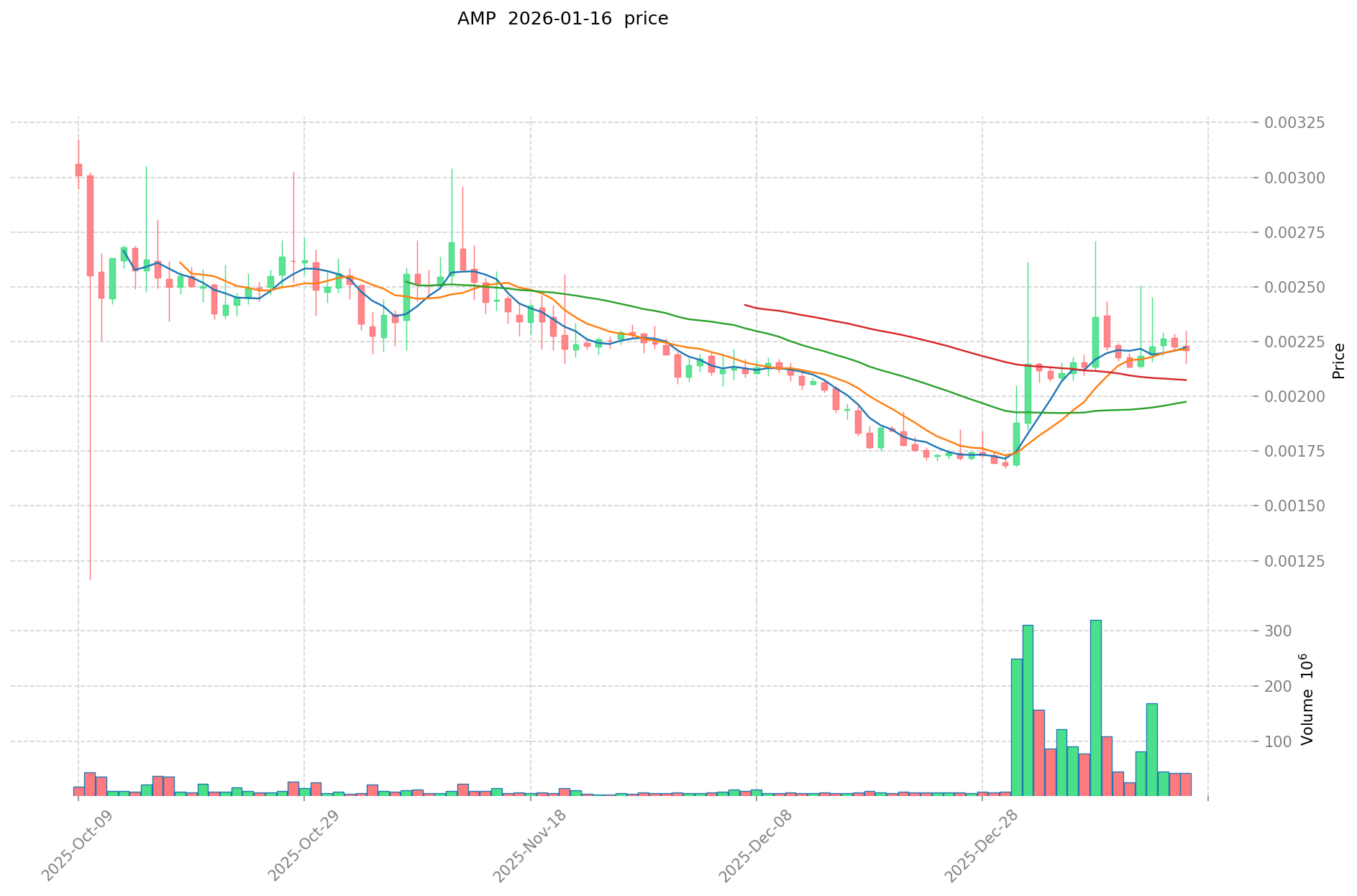
- AMP Current Price: $0.002211
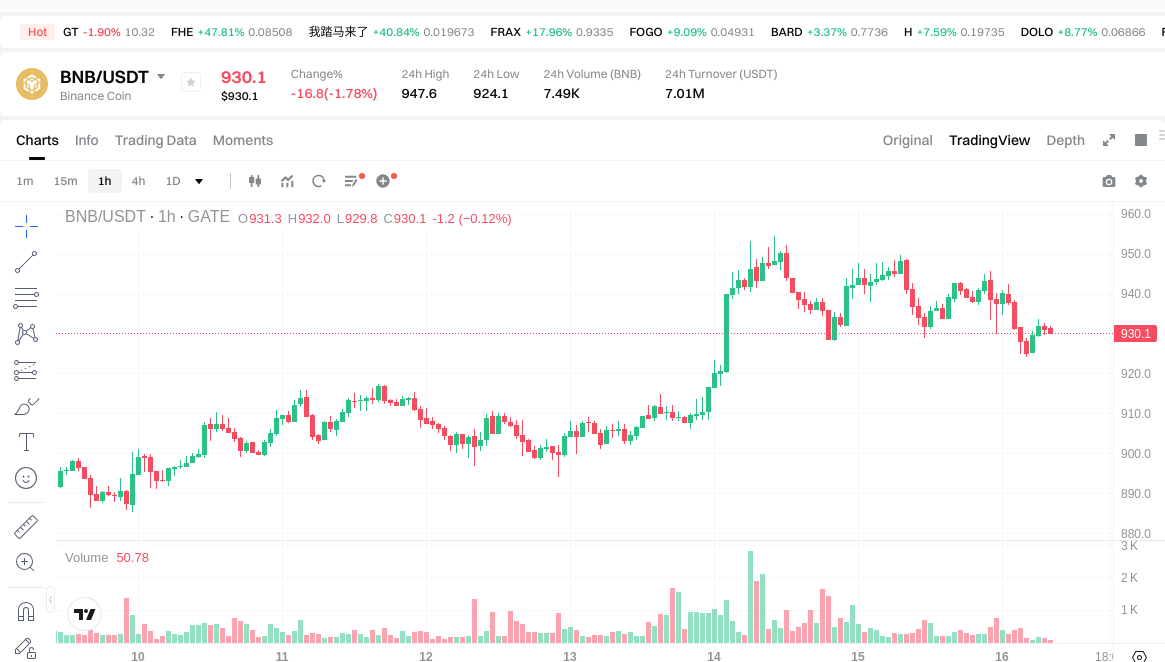
- BNB Current Price: $931.3
- 24-Hour Trading Volume: AMP recorded $95,161.77 compared to BNB's $7,002,790.58
- 24-Hour Price Change: AMP decreased by 0.8%, while BNB declined by 1.81%
- Market Capitalization: AMP holds approximately $186.35 million, whereas BNB maintains a market cap of approximately $126.99 billion
- Market Sentiment Index (Fear & Greed Index): 61 (Greed)
View real-time prices:
II. Core Factors Influencing AMP vs BNB Investment Value
Supply Mechanism Comparison (Tokenomics)
- BNB: Features a deflationary mechanism through quarterly token burns, gradually reducing circulating supply over time. The burn process is tied to Binance's trading volume and ecosystem activity, creating a supply reduction mechanism that may support long-term value.
- AMP: Supply mechanism information is not available in the provided materials.
- 📌 Historical Pattern: Deflationary mechanisms in BNB have historically contributed to price support during various market cycles, as reduced supply combined with sustained demand creates potential upward pressure.
Institutional Adoption and Market Application
- Institutional Holdings: BNB has shown increased institutional interest, with institutional investors adding positions in recent periods. The asset offers potential for structural diversification and asymmetric upside potential within institutional portfolios.
- Enterprise Adoption: BNB demonstrates application across multiple sectors including Real-World Asset (RWA) tokenization, cross-border settlement, and decentralized finance infrastructure. Traditional institutions have deepened cooperation with the Binance ecosystem.
- Regulatory Environment: Recent developments indicate reduced regulatory pressure on BNB, with improved clarity in certain jurisdictions contributing to institutional confidence. Different regions maintain varying stances on cryptocurrency regulation.
Technology Development and Ecosystem Building
- BNB Technology Development: BNB Chain continues to develop its infrastructure capabilities, particularly in supporting Web3 applications and decentralized protocols. The platform maintains advantages in transaction processing and ecosystem scalability.
- AMP Technology Development: Technology development information is not available in the provided materials.
- Ecosystem Comparison: BNB Chain demonstrates activity across DeFi applications, NFT marketplaces, and smart contract deployment. The RWA sector represents a growth area for the BNB ecosystem, with increasing traditional asset tokenization on the platform.
Macroeconomic Environment and Market Cycles
- Inflation Environment Performance: BNB's value support derives from multiple factors including exchange market share, ecosystem growth, and deflationary tokenomics. These characteristics may provide certain resilience during various economic conditions.
- Macroeconomic Monetary Policy: Broader cryptocurrency market dynamics, including interest rate environments and dollar index movements, influence digital asset valuations. BNB's performance reflects both crypto-specific factors and general market conditions.
- Geopolitical Factors: Cross-border transaction infrastructure and international regulatory developments continue to shape the operating environment for major cryptocurrency platforms and their native tokens.
III. 2026-2031 Price Forecast: AMP vs BNB
Short-term Forecast (2026)
- AMP: Conservative $0.001436 - $0.002209 | Optimistic $0.002209 - $0.002673
- BNB: Conservative $838.35 - $931.5 | Optimistic $931.5 - $1313.42
Mid-term Forecast (2028-2029)
- AMP may enter a consolidation phase, with projected prices ranging from $0.001556 to $0.003630
- BNB may enter an expansion phase, with projected prices ranging from $786.95 to $2312.47
- Key drivers: institutional capital inflows, ETF developments, ecosystem growth
Long-term Forecast (2030-2031)
- AMP: Baseline scenario $0.002116 - $0.003533 | Optimistic scenario $0.003809 - $0.005228
- BNB: Baseline scenario $1113.31 - $2166.99 | Optimistic scenario $2345.91 - $2730.40
View detailed price predictions for AMP and BNB
Disclaimer
AMP:
| Year |
Predicted High Price |
Predicted Average Price |
Predicted Low Price |
Price Change |
| 2026 |
0.00267289 |
0.002209 |
0.00143585 |
0 |
| 2027 |
0.00310000015 |
0.002440945 |
0.0015622048 |
10 |
| 2028 |
0.002992110381 |
0.002770472575 |
0.00252113004325 |
25 |
| 2029 |
0.00363042726228 |
0.002881291478 |
0.00155589739812 |
30 |
| 2030 |
0.003809355463063 |
0.00325585937014 |
0.002116308590591 |
47 |
| 2031 |
0.00522825897657 |
0.003532607416601 |
0.003285324897439 |
59 |
BNB:
| Year |
Predicted High Price |
Predicted Average Price |
Predicted Low Price |
Price Change |
| 2026 |
1313.415 |
931.5 |
838.35 |
0 |
| 2027 |
1638.78795 |
1122.4575 |
987.7626 |
20 |
| 2028 |
1946.67804225 |
1380.622725 |
786.95495325 |
48 |
| 2029 |
2312.47403323875 |
1663.650383625 |
1214.46478004625 |
78 |
| 2030 |
2345.9134059496125 |
1988.062208431875 |
1113.31483672185 |
113 |
| 2031 |
2730.404637060337125 |
2166.98780719074375 |
1711.920367680687562 |
132 |
IV. Investment Strategy Comparison: AMP vs BNB
Long-term vs Short-term Investment Strategies
- AMP: May be suitable for investors interested in payment infrastructure scenarios and collateral-based solution potential, particularly those willing to accept higher volatility in exchange for exposure to the digital payments sector.
- BNB: May be suitable for investors seeking exposure to established cryptocurrency exchange ecosystems, with interest in deflationary tokenomics and diversified utility across multiple blockchain applications.
Risk Management and Asset Allocation
- Conservative Investors: AMP 5-10% vs BNB 15-25% (within overall cryptocurrency allocation)
- Aggressive Investors: AMP 10-20% vs BNB 25-40% (within overall cryptocurrency allocation)
- Hedging Tools: Stablecoin allocation for liquidity management, derivatives for downside protection, cross-asset diversification across multiple cryptocurrency sectors
V. Potential Risk Comparison
Market Risk
- AMP: Demonstrates significant price volatility with historical decline from peak to trough, lower trading volume compared to major market cap tokens, and exposure to payment adoption cycle fluctuations.
- BNB: Subject to exchange-related market sentiment, regulatory developments affecting centralized platforms, and competitive pressure from alternative layer-1 blockchain ecosystems.
Technology Risk
- AMP: Technology development information not available in provided materials; general considerations for payment tokens include network scalability and merchant adoption infrastructure.
- BNB: Considerations include network congestion during high-activity periods, smart contract security across ecosystem applications, and ongoing infrastructure development requirements.
Regulatory Risk
- Global regulatory policies impact both assets differently: AMP as a payment-focused token faces regulations related to payment systems and money transmission, while BNB encounters scrutiny related to exchange operations, securities classification questions, and cross-border transaction frameworks. Regulatory developments vary significantly across jurisdictions.
VI. Conclusion: Which Is the Better Buy?
📌 Investment Value Summary:
- AMP Characteristics: Positioned within the digital payments infrastructure sector with focus on collateral mechanisms for cryptocurrency transactions; demonstrates higher price volatility with lower market capitalization.
- BNB Characteristics: Established presence within a major cryptocurrency exchange ecosystem with deflationary token burn mechanism; demonstrates broader utility across DeFi, NFT, and Web3 applications; maintains significantly higher market capitalization and trading volume.
✅ Investment Considerations:
- Beginning Investors: Consider starting with established assets demonstrating higher liquidity and broader market adoption; prioritize understanding of fundamental use cases and ecosystem dynamics before allocation decisions.
- Experienced Investors: Evaluate portfolio positioning based on existing cryptocurrency exposure, risk tolerance parameters, and conviction regarding payment infrastructure versus exchange ecosystem growth trajectories; consider implementing staged entry strategies.
- Institutional Investors: Assess alignment with portfolio objectives including liquidity requirements, custody infrastructure compatibility, regulatory compliance frameworks, and exposure to specific cryptocurrency sector themes.
⚠️ Risk Disclosure: Cryptocurrency markets demonstrate substantial volatility and uncertainty. This content does not constitute investment advice, financial guidance, or trading recommendations. Market participants should conduct independent research, assess personal risk tolerance, and consider consultation with qualified financial professionals before making investment decisions.
VII. FAQ
Q1: What is the primary difference between AMP and BNB in terms of use cases?
AMP serves as a collateral token for the Flexa payment network, designed to secure cryptocurrency transactions for merchants, while BNB functions as the native utility token of the Binance ecosystem, providing transaction fee discounts, DeFi access, and serving as gas for BNB Chain operations. AMP focuses specifically on payment infrastructure and merchant adoption scenarios, whereas BNB demonstrates broader utility across multiple blockchain applications including decentralized finance, NFT marketplaces, Web3 development, and cross-border settlement infrastructure.
Q2: Which token demonstrates better historical price stability between AMP and BNB?
BNB demonstrates significantly better historical price stability compared to AMP. While AMP declined from its all-time high of $0.120813 (June 2021) to $0.00140933 (October 2023)—representing a substantial contraction—BNB maintained relative resilience throughout market cycles, rising from $0.0398177 (October 2017) to $1,369.99 (October 2025). BNB's deflationary token burn mechanism, diversified ecosystem utility, and established market position have contributed to its comparatively stronger price performance and lower volatility profile.
Q3: What are the key risk factors investors should consider when comparing AMP vs BNB?
For AMP, primary risk factors include significant price volatility, lower trading volume and market capitalization, dependence on merchant adoption rates within the payment sector, and limited available information regarding technology development trajectory. For BNB, key risks encompass regulatory scrutiny of centralized exchange operations, potential securities classification questions across jurisdictions, competitive pressure from alternative layer-1 blockchain platforms, exchange-related market sentiment fluctuations, and network congestion during high-activity periods. Both assets remain subject to broader cryptocurrency market volatility and evolving global regulatory frameworks.
Q4: How do the supply mechanisms of AMP and BNB differ?
BNB features a clearly defined deflationary mechanism through quarterly token burns tied to Binance's trading volume and ecosystem activity, systematically reducing circulating supply over time to create potential upward price pressure. This burn process continues until reaching the target of 100 million BNB tokens. In contrast, specific supply mechanism information for AMP is not available in the provided materials, making direct comparison of tokenomics challenging. The deflationary nature of BNB's supply structure has historically provided price support during various market cycles when combined with sustained demand.
Q5: What market capitalization and liquidity differences exist between AMP and BNB?
As of January 16, 2026, BNB maintains a market capitalization of approximately $126.99 billion compared to AMP's approximately $186.35 million—representing a difference of several orders of magnitude. Trading volume reflects similar disparity: BNB recorded $7,002,790.58 in 24-hour volume versus AMP's $95,161.77. These substantial differences in market capitalization and liquidity indicate that BNB offers significantly greater market depth, easier entry and exit positions, lower slippage on larger transactions, and broader institutional participation compared to AMP's smaller market footprint.
Q6: Which token is more suitable for institutional investors?
BNB demonstrates characteristics more aligned with institutional investment requirements, including significantly higher liquidity facilitating larger position sizes, established custody infrastructure compatibility, broader regulatory clarity in multiple jurisdictions, diversified utility reducing single-point dependency risks, and demonstrated institutional adoption patterns. BNB's integration within a major cryptocurrency exchange ecosystem provides institutional investors with exposure to multiple blockchain sector themes including DeFi infrastructure, Real-World Asset tokenization, and cross-border settlement capabilities. AMP's smaller market capitalization and lower liquidity present challenges for institutional allocation strategies requiring substantial position sizes and reliable exit liquidity.
Q7: What price performance projections exist for AMP vs BNB through 2031?
Short-term projections for 2026 indicate AMP ranging from $0.001436-$0.002673 while BNB ranges from $838.35-$1,313.42. Mid-term forecasts for 2028-2029 project AMP between $0.001556-$0.003630 during consolidation phases, compared to BNB's expansion potential of $786.95-$2,312.47. Long-term 2030-2031 baseline scenarios suggest AMP reaching $0.002116-$0.003533 versus BNB's $1,113.31-$2,166.99, with optimistic scenarios projecting AMP at $0.003809-$0.005228 and BNB at $2,345.91-$2,730.40. These projections reflect different growth trajectories, with BNB demonstrating higher absolute price appreciation potential supported by ecosystem expansion and deflationary tokenomics.
Q8: How should beginning investors approach allocation between AMP and BNB?
Beginning investors should prioritize understanding fundamental use cases and ecosystem dynamics before making allocation decisions. Conservative allocation strategies suggest 5-10% AMP versus 15-25% BNB within overall cryptocurrency portfolio exposure, reflecting BNB's established market position, higher liquidity, and broader utility. New investors should consider starting with more established assets like BNB that demonstrate higher trading volumes and market adoption before exploring smaller market cap tokens like AMP. Implementing staged entry strategies, maintaining adequate stablecoin reserves for liquidity management, and conducting thorough independent research regarding risk tolerance and investment objectives remain essential regardless of chosen allocation approach.
* The information is not intended to be and does not constitute financial advice or any other recommendation of any sort offered or endorsed by Gate.