This comprehensive guide analyzes Mintlayer (ML) token price dynamics and provides advanced forecasting models for 2026-2031, combining historical patterns, market supply-demand analysis, and ecosystem development trends. The article examines ML's current market position with $3.41M capitalization and $0.0159 trading price, reviewing price history, holding distribution, and sentiment indicators to establish baseline metrics. Core factors influencing future price include supply mechanisms, macroeconomic conditions, and technology development within the Bitcoin Layer 2 DeFi ecosystem. Detailed price predictions range from conservative to optimistic scenarios across different timeframes, alongside professional investment strategies including long-term holding and active trading approaches. Risk management frameworks address portfolio allocation, hedging strategies, and secure storage solutions via Gate Web3 Wallet. The guide concludes with comprehensive risk assessment, including market volatility, liquidity con
Introduction: ML's Market Position and Investment Value
Mintlayer (ML), as a Bitcoin Layer 2 protocol enabling decentralized finance through atomic swaps, has been developing its ecosystem since its launch in 2023. As of 2026, ML maintains a market capitalization of approximately $3.41 million, with a circulating supply of around 214.92 million tokens, and the price stabilizes at approximately $0.0159. This asset, recognized as an innovative solution for native Bitcoin DeFi applications, is playing an increasingly important role in bridging Bitcoin with decentralized financial services.
This article will comprehensively analyze ML's price trends from 2026 to 2031, combining historical patterns, market supply and demand dynamics, ecosystem development, and macroeconomic conditions to provide investors with professional price forecasts and practical investment strategies.
I. ML Price History Review and Market Status
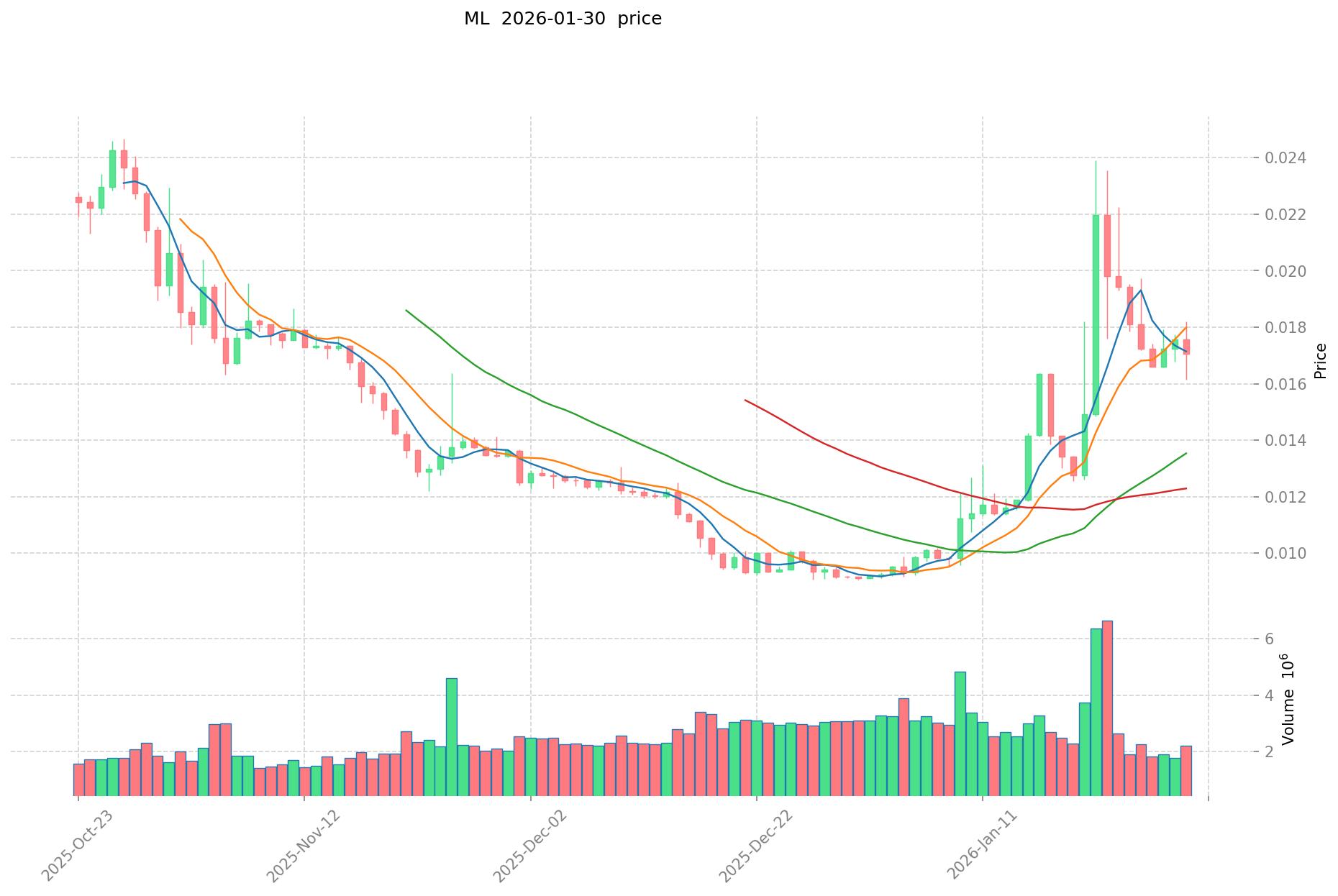
ML Historical Price Evolution Trajectory
- 2024: The token reached a notable price level during January, with fluctuations reflecting early market dynamics
- 2025: The project experienced significant market adjustments, with price movements indicating broader cryptocurrency market trends
- Recent period: Price volatility has been observed across different timeframes, showing varied performance patterns
ML Current Market Situation
As of January 30, 2026, Mintlayer (ML) is trading at $0.015887, reflecting a 6.62% decline over the past 24 hours. The token has demonstrated mixed performance across different time horizons, with a 2.62% decrease in the last hour and a 21.77% decline over the past week. However, the 30-day performance shows a 72.14% increase, indicating recent recovery momentum.
The current trading range shows a 24-hour high of $0.017544 and a low of $0.015761. The token's market capitalization stands at approximately $3.41 million, with a circulating supply of 214.92 million ML tokens out of a maximum supply of 600 million. The market cap to fully diluted valuation ratio is 35.82%, suggesting substantial room for token distribution.
Mintlayer's trading volume over the past 24 hours reached $36,277.50, distributed across 5 exchanges. The token holder count stands at 13,922, indicating a growing community base. The current market dominance is 0.00021%, positioning ML as an emerging project within the cryptocurrency ecosystem.
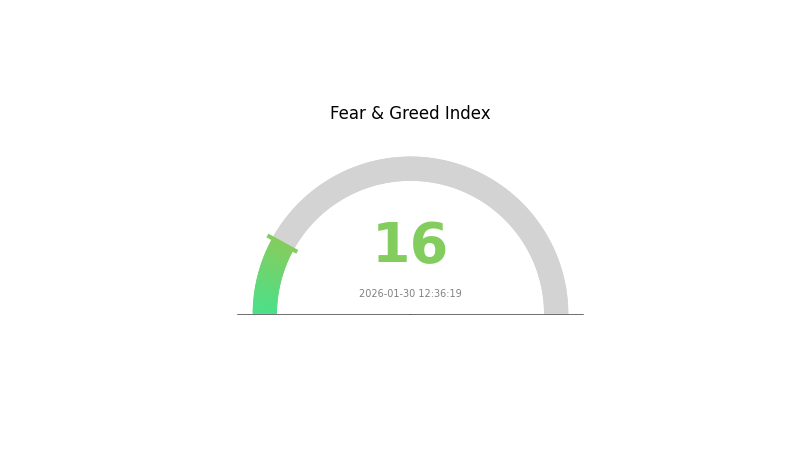
The token is available on the Ethereum blockchain with the contract address 0x059956483753947536204e89bfaD909E1a434Cc6. Market sentiment indicators show a reading of 16 on the volatility index, characterized as "Extreme Fear," reflecting current market uncertainty.
Click to view current ML market price
ML Market Sentiment Index
2026-01-30 Fear and Greed Index: 16 (Extreme Fear)
Click to view current Fear & Greed Index
The cryptocurrency market is currently experiencing extreme fear, with the index at 16. This indicates heightened market anxiety and pessimistic sentiment among investors. Such extreme fear levels often present contrarian opportunities, as excessive pessimism may create favorable entry points for long-term investors. Market participants should exercise caution while monitoring for potential turning points, as extreme readings historically precede market recoveries.
ML Holding Distribution
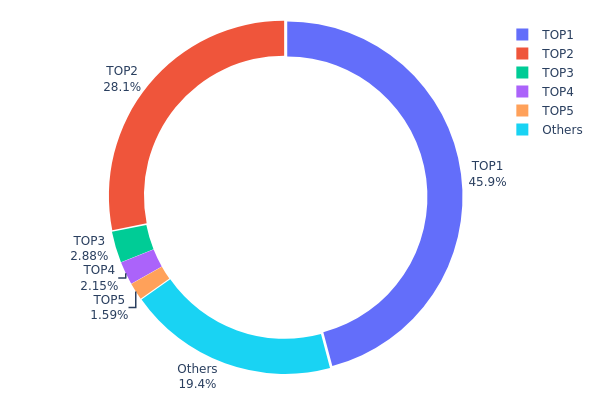
The holding distribution chart visualizes the concentration of ML tokens across different wallet addresses, revealing how supply is allocated between major holders and smaller participants. This metric serves as a crucial indicator of decentralization level and potential market manipulation risks within the token ecosystem.
Based on current data, ML exhibits significant concentration characteristics. The top address controls 183,425K tokens (45.85% of total supply), while the second-largest holder possesses 112,530.24K tokens (28.13%). Combined, these two addresses account for approximately 73.98% of the entire circulating supply, indicating an extremely centralized distribution structure. The top five addresses collectively hold over 80% of ML tokens, with the remaining 19.41% distributed among all other market participants. This level of concentration substantially exceeds typical industry standards, where healthy projects generally maintain top-10 holder concentrations below 50%.
Such extreme centralization poses multiple implications for market structure and price dynamics. The dominant control by few addresses creates heightened vulnerability to large-scale selling pressure, as any significant movement from top holders could trigger substantial price volatility. Additionally, this concentration structure amplifies potential manipulation risks, as coordinated actions by major holders could artificially influence price discovery mechanisms. From a liquidity perspective, the limited distribution among retail participants may result in reduced trading depth and increased slippage during periods of market stress. However, if these concentrated holdings represent project treasury allocations, team vestings, or ecosystem development funds with clear lock-up schedules, the actual market impact may be mitigated through transparent token release mechanisms.
Click to view current ML Holding Distribution
| Top |
Address |
Holding Qty |
Holding (%) |
| 1 |
0x0599...434cc6 |
183425.00K |
45.85% |
| 2 |
0xe03a...ea283f |
112530.24K |
28.13% |
| 3 |
0x9642...2f5d4e |
11530.26K |
2.88% |
| 4 |
0x3cc9...aecf18 |
8596.16K |
2.14% |
| 5 |
0x0d07...b492fe |
6367.16K |
1.59% |
| - |
Others |
77551.18K |
19.41% |
II. Core Factors Influencing ML's Future Price
Supply Mechanism
- Halving Events: The ML network implements periodic halving mechanisms, reducing miner rewards systematically.
- Historical Pattern: Past halving events have typically led to price appreciation due to decreased inflation rates.
- Current Impact: If historical trends continue, the next halving cycle may create upward price pressure.
Macroeconomic Environment
- Monetary Policy Impact: Global central bank policies and interest rate decisions significantly influence investor risk appetite in cryptocurrency markets.
- Data Quality Challenges: Financial market data presents lower signal-to-noise ratios compared to other domains, affecting prediction accuracy.
- Market Adaptability: Financial markets demonstrate self-adaptive characteristics, requiring continuous model adjustment and monitoring.
Technology Development and Ecosystem Building
- Machine Learning Algorithm Advancement: Enhanced alpha models demonstrate superior performance over traditional linear models in predicting cross-sectional returns.
- Non-linear Effect Discovery: Machine learning algorithms excel at identifying complex relationships between financial indicators and returns without predefined assumptions.
- Application Expansion: Growing adoption in quantitative investment strategies, including crash prediction models and fundamental analysis enhancement, strengthens the technology's market position.
III. 2026-2031 ML Price Prediction
2026 Outlook
- Conservative prediction: $0.00851 - $0.01577
- Neutral prediction: Around $0.01577
- Optimistic prediction: Up to $0.01624 (requires favorable market conditions and increased adoption)
2027-2029 Outlook
- Market stage expectation: The token is projected to experience gradual growth during this mid-term period, with potential accumulation phases and moderate upward momentum as the project develops its ecosystem and user base.
- Price range prediction:
- 2027: $0.01424 - $0.02273
- 2028: $0.01278 - $0.02246
- 2029: $0.01569 - $0.03033
- Key catalysts: Technology upgrades, partnership expansions, and broader market recovery could serve as primary drivers for price appreciation during this period.
2030-2031 Long-term Outlook
- Baseline scenario: $0.01435 - $0.03228 (assuming steady project development and stable market conditions)
- Optimistic scenario: $0.02548 - $0.03619 (contingent upon successful platform scaling and increased institutional interest)
- Transformative scenario: Potential to reach upper range of $0.03619 by 2031 (requires exceptional market conditions, widespread adoption, and significant technological breakthroughs)
- 2026-01-30: ML trading within the predicted range as market participants assess long-term potential
| Year |
Predicted High Price |
Predicted Average Price |
Predicted Low Price |
Price Change |
| 2026 |
0.01624 |
0.01577 |
0.00851 |
0 |
| 2027 |
0.02273 |
0.016 |
0.01424 |
0 |
| 2028 |
0.02246 |
0.01937 |
0.01278 |
21 |
| 2029 |
0.03033 |
0.02091 |
0.01569 |
31 |
| 2030 |
0.03228 |
0.02562 |
0.01435 |
61 |
| 2031 |
0.03619 |
0.02895 |
0.02548 |
82 |
IV. ML Professional Investment Strategies and Risk Management
ML Investment Methodology
(I) Long-term Holding Strategy
- Target Investors: Users who believe in Bitcoin Layer 2 ecosystem development and DeFi innovation
- Operational Recommendations:
- Accumulate positions during market corrections, considering ML's 72.14% monthly gain shows recovery potential from recent lows
- Monitor Mintlayer protocol developments including atomic swap improvements and DeFi ecosystem expansion
- Implement secure storage solutions using Gate Web3 Wallet for long-term asset custody
(II) Active Trading Strategy
- Technical Analysis Tools:
- Volume Analysis: Current 24-hour trading volume of $36,277.50 indicates moderate liquidity for short-term trading
- Support/Resistance Levels: Monitor the $0.01576 (24h low) and $0.01754 (24h high) range for entry/exit points
- Swing Trading Considerations:
- Watch for volatility patterns given the -21.77% weekly decline versus +72.14% monthly gain
- Set stop-loss orders below recent support levels to manage downside risk
ML Risk Management Framework
(I) Asset Allocation Principles
- Conservative Investors: 1-3% of crypto portfolio allocation
- Moderate Investors: 3-5% of crypto portfolio allocation
- Aggressive Investors: 5-10% of crypto portfolio allocation, suitable for those with higher risk tolerance
(II) Risk Hedging Approaches
- Portfolio Diversification: Balance ML holdings with established cryptocurrencies and stablecoins
- Position Sizing: Scale positions based on market cap rank (#1749) and circulating supply (35.82% of total supply)
(III) Secure Storage Solutions
- Hot Wallet Recommendation: Gate Web3 Wallet for convenient trading and staking access
- Multi-signature Solutions: Consider multi-sig wallets for larger ML holdings
- Security Precautions: Enable two-factor authentication, regularly update security protocols, and never share private keys
V. ML Potential Risks and Challenges
ML Market Risks
- High Volatility: ML experienced -68.4% decline over one year, demonstrating significant price fluctuations
- Limited Liquidity: With only 5 exchanges listing ML and $36,277.50 daily volume, large trades may face slippage
- Market Cap Position: Ranked #1749 with $3.41M market cap indicates smaller project size and higher risk profile
ML Regulatory Risks
- DeFi Protocol Uncertainty: Evolving regulatory frameworks for decentralized finance may impact Mintlayer's atomic swap functionality
- Cross-border Compliance: Bitcoin Layer 2 protocols may face varying regulatory treatment across jurisdictions
- Token Classification: Potential regulatory scrutiny regarding ML's classification and usage within the ecosystem
ML Technical Risks
- Layer 2 Competition: Multiple Bitcoin Layer 2 solutions competing for market share and adoption
- Atomic Swap Complexity: Technical challenges in maintaining secure 1:1 native Bitcoin swaps without intermediaries
- Smart Contract Vulnerabilities: Risks associated with protocol upgrades and potential security exploits in DeFi infrastructure
VI. Conclusion and Action Recommendations
ML Investment Value Assessment
Mintlayer presents a specialized Bitcoin Layer 2 DeFi solution with unique atomic swap technology enabling native BTC usage without wrapped tokens or intermediaries. The project's 72.14% monthly recovery suggests renewed interest, though the -68.4% annual decline and -21.77% weekly performance indicate ongoing volatility. With 35.82% token circulation and 13,922 holders, ML remains an emerging project with growth potential balanced against execution risks in the competitive Layer 2 landscape.
ML Investment Recommendations
✅ Beginners: Start with minimal exposure (1-2% of crypto portfolio), focus on learning about Bitcoin Layer 2 technology and atomic swaps before increasing position size
✅ Experienced Investors: Consider ML as a speculative allocation within a diversified DeFi portfolio, implementing strict stop-loss parameters and monitoring protocol development milestones
✅ Institutional Investors: Evaluate Mintlayer's technology roadmap and ecosystem growth metrics, considering small pilot allocations for Bitcoin DeFi exposure with appropriate risk hedging
ML Trading Participation Methods
- Spot Trading on Gate.com: Direct purchase and sale of ML tokens with competitive trading fees and liquidity
- Dollar-Cost Averaging: Systematic periodic purchases to mitigate volatility impact over time
- Ecosystem Participation: Engage with Mintlayer protocol features including token creation and atomic swaps to understand utility value
Cryptocurrency investment carries extreme risk, and this article does not constitute investment advice. Investors should make cautious decisions based on their own risk tolerance and are advised to consult professional financial advisors. Never invest more than you can afford to lose.
FAQ
What is machine learning price prediction? What are its basic principles?
Machine learning price prediction uses algorithms to analyze historical data and forecast future prices. It works by training models to identify patterns, trends, and relationships in transaction volume, market data, and on-chain metrics to generate price predictions.
What are common machine learning algorithms used for price prediction? What are their respective advantages and disadvantages?
Common algorithms include linear regression, random forest, and neural networks. Linear regression is simple but assumes linear relationships. Random forest is powerful but complex. Neural networks are efficient but require large datasets and computational resources.
What data is required for ML price prediction? What are the data quality requirements?
ML price prediction requires historical price data, trading volume, market trends, and on-chain metrics. Data quality must be high with minimal errors and gaps. More comprehensive, accurate data typically yields more reliable predictions.
How to evaluate the accuracy and reliability of machine learning price prediction models?
Evaluate ML price prediction models through cross-validation, backtesting against historical data, and key metrics like Mean Absolute Error(MAE), Root Mean Square Error(RMSE), and Sharpe Ratio. Compare predictions with actual price movements to assess model performance and reliability.
What are the main challenges and limitations of ML price prediction in practical applications?
ML price prediction faces data quality issues, market volatility, and external factor impacts. Models struggle with market sentiment shifts and geopolitical events. Real-world accuracy remains limited by incomplete historical data and rapidly changing market dynamics.
What are the differences in machine learning price prediction applications across stocks, real estate, and commodities?
ML price prediction differs by data complexity and market volatility. Stocks require non-linear models capturing rapid market dynamics, while real estate relies on stable economic indicators and linear relationships. Commodities depend on supply-demand factors and geopolitical events, demanding hybrid approaches.
How to prevent ML price prediction model overfitting?
Use regularization techniques, cross-validation, ensemble methods, and train with diverse market data. Simplify model complexity, implement early stopping, and validate against multiple timeframes to ensure robust predictions.
* The information is not intended to be and does not constitute financial advice or any other recommendation of any sort offered or endorsed by Gate.