Com a rápida convergência entre IA e tecnologia blockchain, a infraestrutura de dados Web3 está se consolidando como a base indispensável para a implantação de aplicações de IA no mundo real. Seja por meio de um Agente de IA que executa negociações automaticamente ou de um sistema inteligente de análise on-chain, ambos dependem de fontes de dados de alta qualidade, padronizadas e acessíveis em tempo real. Entretanto, desafios como inconsistências na estrutura de dados entre diferentes blockchains, interfaces fragmentadas e custos elevados de acesso a dados restringem a eficiência da IA em ambientes on-chain. Diante disso, protocolos de infraestrutura voltados para serviços de dados on-chain despontam como protagonistas no cenário de IA + Web3.
SkyAI e Chainbase estão entre os projetos mais destacados desse segmento. Ambos buscam ampliar a disponibilidade de dados on-chain, mas adotam abordagens técnicas e propostas de valor distintas. Chainbase prioriza a construção de indexação de dados on-chain e uma camada unificada de acesso, enquanto SkyAI acrescenta recursos de invocação de Agente de IA e mecanismos de liquidez de dados sobre esse alicerce.
No contexto do setor, esses modelos representam posições diferentes: “infraestrutura de serviços de dados” e “infraestrutura de interação de dados para IA”.
Como SkyAI e Chainbase se diferenciam em posicionamento?
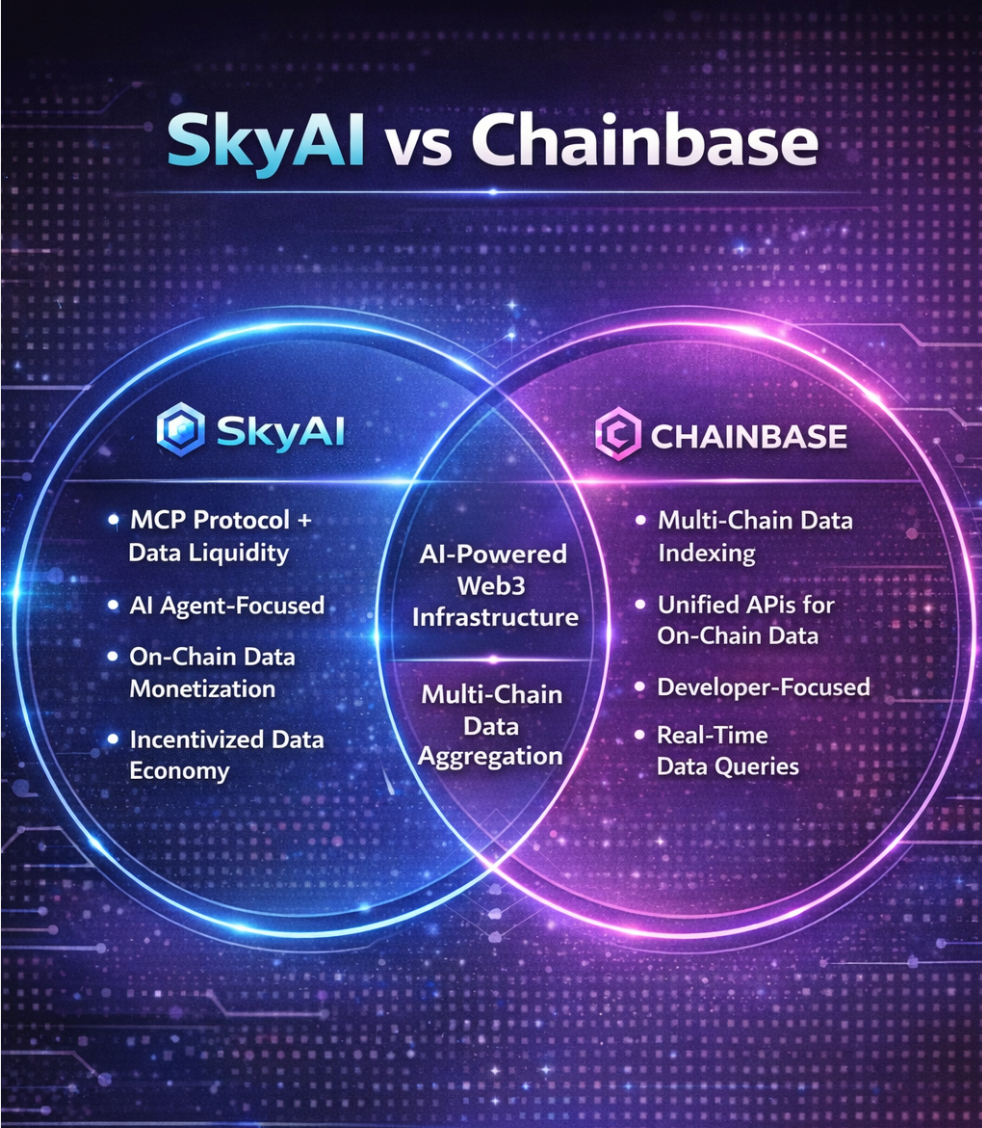
A principal diferença entre SkyAI e Chainbase está no posicionamento dos protocolos. Chainbase foi desenvolvida como infraestrutura fundamental de rede de dados Web3, oferecendo a desenvolvedores e aplicações acesso eficiente a dados por padrões unificados e serviços de indexação multi-cadeia. Sua missão é ajudar desenvolvedores a superar desafios de acesso e processamento de dados on-chain, reduzindo as barreiras para o uso desses dados.
Já a SkyAI direciona seu foco para as necessidades de dados de Agentes de IA operando on-chain. Além de prover serviços de dados, aplica o protocolo MCP para estabelecer interfaces padronizadas de interação de dados para modelos de IA e introduz um mecanismo de Liquidez de Dados, permitindo que recursos de dados tenham liquidez e capacidade de troca de valor. Em outras palavras, SkyAI vai além do acesso: garante que dados possam ser invocados em tempo real pela IA e participar de transferências de valor.
Assim, Chainbase atua como camada de serviço de dados on-chain, enquanto SkyAI funciona como camada de interação de dados voltada para Agentes de IA.
Quais são as diferenças na arquitetura técnica entre SkyAI e Chainbase?
Apesar de ambos serem protocolos de infraestrutura de dados Web3, SkyAI e Chainbase apresentam arquiteturas técnicas fundamentalmente distintas. Chainbase adota uma abordagem tradicional de rede de indexação, agregando dados multi-cadeia e oferecendo interfaces unificadas para acesso dos desenvolvedores. SkyAI, por sua vez, amplia a agregação de dados ao incorporar protocolos de invocação de Agente de IA e mecanismos de liquidez de dados, tornando os dados acessíveis e disponíveis para invocação em tempo real por IA e para troca de valor.
Tecnicamente, Chainbase foca em indexação e padronização de dados on-chain, enquanto SkyAI busca construir uma camada de interação de dados para Agentes de IA, priorizando a colaboração em tempo real entre dados e modelos de IA em seu protocolo.
| Dimensão de comparação |
SkyAI |
Chainbase |
| Posicionamento central |
Infraestrutura de interação de dados para Agente de IA |
Infraestrutura de indexação de dados multi-cadeia |
| Funções principais |
Invocação de dados + Liquidez de dados |
Indexação de dados + Acesso a dados |
| Foco do protocolo |
Protocolo MCP + Liquidez de dados |
Indexação de dados + Serviço de API |
| Público-alvo |
Agente de IA, Apps automatizados |
Desenvolvedor, DApps |
| Mecanismo de valor dos dados |
Dados podem ser invocados e incentivados para circulação |
Principalmente fornece acesso a dados |
| Cenários aplicáveis |
Agente de IA, negociação automatizada, execução inteligente |
Consulta de dados, análise on-chain, desenvolvimento de aplicações |
| Lógica de valor |
Valor de interação de dados + liquidez de dados |
Valor de rede de serviço de dados |
Em síntese, Chainbase é uma camada de infraestrutura de dados para desenvolvedores, enquanto SkyAI é uma camada de execução de dados para Agentes de IA. Mais do que concorrentes, representam etapas distintas da evolução da infraestrutura de dados Web3 impulsionada por IA.
Se Agentes de IA se consolidarem como porta de entrada para aplicações on-chain, soluções como SkyAI — com protocolos de interação padronizados e mecanismos de liquidez de dados — tendem a apresentar maior escalabilidade e crescimento em casos de uso de IA + Web3.
Como SkyAI e Chainbase se diferenciam na captura de valor?
Na lógica de captura de valor, Chainbase baseia seu valor central em sua rede de serviços de dados. Quanto mais desenvolvedores utilizam seus serviços, maior o valor de rede do protocolo, impulsionando a expansão do ecossistema. Esse modelo se assemelha ao de plataformas tradicionais de infraestrutura de dados, onde o crescimento depende principalmente da adoção por desenvolvedores e do aumento da demanda por serviços.
A lógica de captura de valor da SkyAI é mais avançada. Além do crescimento da demanda por serviços de dados, seu mecanismo de Liquidez de Dados transforma dados on-chain em ativos líquidos, fazendo do próprio processo de invocação de dados uma troca de valor. Agentes de IA pagam tokens para acessar dados, enquanto provedores de dados são recompensados por fornecê-los, criando um modelo econômico centrado na circulação dos dados.
Assim, o valor da Chainbase está ancorado na “escala de serviço de dados”, enquanto o da SkyAI depende de uma “rede de interação e liquidez de dados”.
Qual é mais adequada para cenários de Agente de IA?
Para cenários de Agente de IA, o design da SkyAI é mais especializado. Agentes de IA precisam não só de acesso a dados on-chain, mas também de contexto estruturado para decisões rápidas e automatizadas. O protocolo MCP, núcleo da SkyAI, foi criado para essas demandas, permitindo que Agentes de IA leiam dados padronizados por uma interface unificada e executem operações on-chain.
Embora Chainbase também ofereça serviços de dados para aplicações de IA, sua arquitetura é mais voltada ao acesso fundamental e não foi otimizada para as necessidades de interação em tempo real dos Agentes de IA. Para esses agentes, que exigem execução automatizada e decisões instantâneas, SkyAI entrega uma base de suporte mais completa.
Por esse motivo, SkyAI é considerada infraestrutura para Agentes de IA no contexto de IA + Web3, enquanto Chainbase é reconhecida como protocolo de serviço de dados de uso geral.
Potencial e desenvolvimento diferenciado de SkyAI e Chainbase
No longo prazo, tanto SkyAI quanto Chainbase têm potencial de crescimento vinculado ao avanço do setor de IA + Web3. O diferencial da Chainbase está em sua infraestrutura robusta e na demanda consolidada por serviços de dados multi-cadeia, o que a torna adequada para diversos tipos de aplicações Web3 e garante demanda estável de mercado.
O potencial da SkyAI depende do crescimento do ecossistema de Agentes de IA. Se a automação on-chain avançar rapidamente, protocolos que entregam interação padronizada de dados e liquidez para Agentes de IA terão maior valorização. Ou seja, SkyAI pode apresentar maior potencial de valorização, mas sua trajetória depende mais da velocidade de adoção desse mercado.
Por isso, Chainbase se encaixa em um modelo de crescimento estável e orientado por infraestrutura, enquanto SkyAI oferece maior flexibilidade de valorização impulsionada pela narrativa de IA.
Resumo
SkyAI e Chainbase não competem diretamente; ocupam camadas distintas no ecossistema de infraestrutura de dados. Chainbase entrega infraestrutura de acesso a dados para desenvolvedores, enquanto SkyAI provê infraestrutura de interação de dados para Agentes de IA.
Quando o foco do mercado está em serviços de dados multi-cadeia, Chainbase oferece valor sólido de infraestrutura. Caso Agentes de IA se consolidem como cenário central no Web3, o design de protocolo da SkyAI é mais inovador e alinhado ao futuro.
Em termos de tendência, SkyAI representa uma integração mais profunda entre IA e interação de dados on-chain, enquanto Chainbase é um componente essencial da infraestrutura de dados on-chain atual. Cada uma reflete um estágio distinto do desenvolvimento do setor — ambas são relevantes, mas por motivos diferentes.
Perguntas frequentes
Qual é a principal diferença entre SkyAI e Chainbase?
A principal diferença está no posicionamento: Chainbase é especializada em serviços de dados multi-cadeia, enquanto SkyAI foca em interação de dados para Agentes de IA e liquidez de dados.
Por que SkyAI é mais adequada para Agentes de IA?
Porque o protocolo MCP da SkyAI entrega contexto de dados on-chain padronizado para Agentes de IA, viabilizando decisões automatizadas em tempo real.
Qual é o principal diferencial da Chainbase?
A força da Chainbase está em sua indexação robusta de dados multi-cadeia e na oferta de serviços de dados padronizados.
Qual tem maior potencial, SkyAI ou Chainbase?
Chainbase tende a um crescimento mais estável, enquanto SkyAI pode apresentar maior potencial de valorização à medida que o ecossistema de Agentes de IA evolui.