À medida que as aplicações de Agente de IA avançam nos ambientes blockchain, a eficiência na obtenção de dados on-chain torna-se determinante para o potencial de automação da IA. Embora a blockchain ofereça dados abertos e transparentes, a fragmentação entre diferentes cadeias, estruturas divergentes e processos de acesso complexos dificultam que modelos de IA interpretem e utilizem diretamente essas informações. Para Agentes de IA que dependem de dados em tempo real para análise e decisões, obstáculos de acesso limitam severamente o desempenho em auto trading, análises on-chain e execução inteligente.
O SkyAI foi criado para superar esses desafios, fornecendo uma infraestrutura de dados dedicada para Agentes de IA. Com base no protocolo MCP, serviços de dados multi-chain e mecanismos de Data Liquidity, o SkyAI estabelece uma camada unificada de acesso a dados, permitindo que a IA leia informações on-chain de forma eficiente e realize interações automatizadas. Para o setor, o SkyAI representa mais do que uma arquitetura de serviço de dados — é uma tecnologia estratégica para padronização de dados on-chain no segmento de infraestrutura de IA + Web3. Seu valor central está em transformar dados on-chain em recursos efetivamente compreensíveis, acionáveis e líquidos para IA.
Como funciona a arquitetura técnica do SkyAI?
A arquitetura operacional do SkyAI é composta por três módulos principais: protocolo MCP, serviços de dados multi-chain e Data Liquidity. Esses elementos formam juntos uma camada padronizada de interação entre Agentes de IA e dados on-chain.
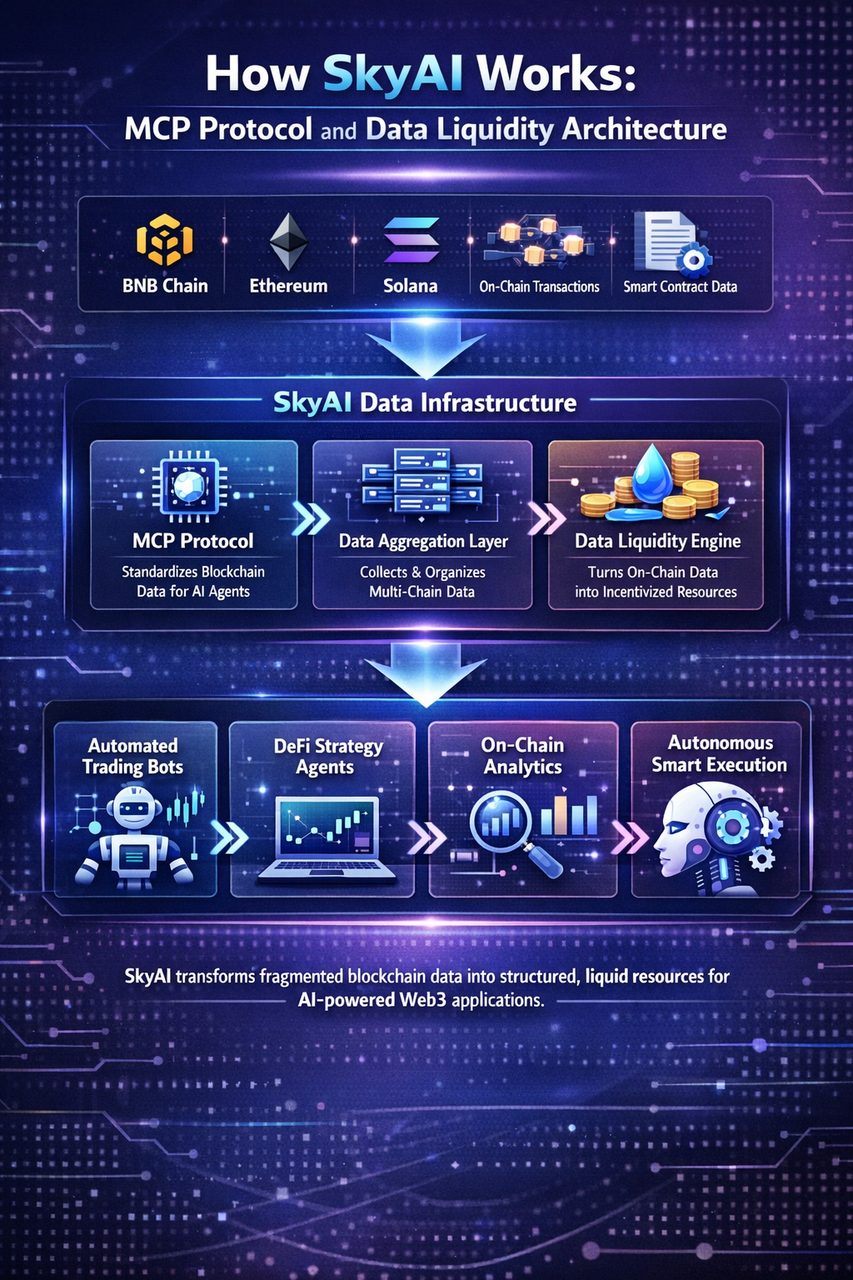
Em blockchains tradicionais, os dados estão dispersos entre várias cadeias e protocolos. A IA precisa se adaptar a diferentes interfaces e formatos para utilizar essas informações, o que gera custos elevados de desenvolvimento e restringe a automação em tempo real. O objetivo do SkyAI é integrar essas fontes fragmentadas, consolidando-as em recursos de acesso ágil para IA.
Nessa arquitetura, o protocolo MCP define as regras de interação entre IA e dados, os serviços de dados multi-chain agregam e padronizam informações on-chain, e o mecanismo de Data Liquidity cria um sistema de circulação de valor, permitindo tanto o acesso quanto a troca de valor via protocolo.
O que é o protocolo MCP? Por que o SkyAI o expande?
O MCP (Model Context Protocol) é a interface padrão que conecta modelos de IA a dados on-chain. Sua principal função é permitir que Agentes de IA obtenham informações contextuais estruturadas e tomem decisões automatizadas com base nesses dados. Nos cenários em que IA e blockchain convergem, conceder apenas acesso a dados brutos on-chain não basta, pois a ausência de padronização inviabiliza a inferência direta pelo modelo.
A expansão do MCP pelo SkyAI transforma dados on-chain complexos em informações contextuais que a IA pode interpretar diretamente. Por exemplo, ao analisar a circulação de ativos em uma determinada cadeia, o SkyAI utiliza o MCP para converter dados brutos de negociação em insumos estruturados, viabilizando análise rápida.
O diferencial desse protocolo é permitir que a IA acesse dados utilizáveis por meio de uma interface única, eliminando a necessidade de conhecer diferentes estruturas de dados blockchain. Essa padronização é essencial para que Agentes de IA alcancem automação de ponta a ponta.
Como os serviços de dados multi-chain do SkyAI aumentam a eficiência?
Os serviços de dados multi-chain são a camada de processamento de dados na arquitetura do SkyAI. Sua função é consolidar e padronizar saídas provenientes de várias blockchains. Como as diferenças de estrutura e interface entre cadeias públicas exigem que Desenvolvedores criem lógicas específicas para cada uma, a complexidade do desenvolvimento de aplicações de IA cresce exponencialmente.
O SkyAI resolve esse desafio ao criar uma camada unificada de agregação, convertendo dados multi-chain em um formato padrão acessível aos Agentes de IA. Assim, a IA pode ler e utilizar dados de qualquer cadeia de maneira consistente, reduzindo custos de desenvolvimento e aumentando a eficiência operacional.
Para Agentes de IA, serviços de dados padronizados são indispensáveis. Eles reduzem o esforço de pré-processamento e viabilizam operações automatizadas altamente eficientes em ambientes multi-chain, ampliando a capacidade de execução.
O que é Data Liquidity? Por que é a inovação central do SkyAI?
Data Liquidity é uma das inovações técnicas mais relevantes do SkyAI. Protocolos convencionais de dados on-chain geralmente oferecem apenas consultas; embora os dados tenham valor intrínseco, falta um mecanismo eficaz de transferência de valor em nível de protocolo. O SkyAI transforma dados em um recurso não só acessível, mas também incentivado.
Com esse mecanismo, provedores de dados recebem recompensas por suas contribuições, enquanto Agentes de IA ou Desenvolvedores pagam tokens para acessar direitos sobre os dados. Assim, dados on-chain deixam de ser informações estáticas e passam a ser ativos econômicos dinâmicos e líquidos.
Data Liquidity é essencial porque cria uma conexão direta de valor entre fornecedores e consumidores de dados, permitindo que o protocolo incentive continuamente a oferta de dados de qualidade e atenda à demanda de aplicações de IA. Isso aumenta a eficiência do uso dos dados e garante a escalabilidade sustentável da rede de serviços do SkyAI.
Por que a arquitetura técnica do SkyAI é essencial para Agentes de IA?
A força dos Agentes de IA está em tomar decisões autônomas e executar ações baseadas em dados em tempo real, o que exige uma infraestrutura de dados robusta. Sem acesso rápido a dados on-chain de alta qualidade, a IA não consegue realizar análises instantâneas nem executar tarefas automatizadas. Portanto, a eficiência no acesso aos dados determina o potencial prático dos Agentes de IA no universo blockchain.
O SkyAI oferece entradas de dados padronizadas para Agentes de IA via protocolo MCP e serviços de dados multi-chain, enquanto o Data Liquidity garante fornecimento contínuo e estável de dados. Isso permite que Agentes de IA executem tarefas automatizadas on-chain com máxima eficiência.
Do ponto de vista da infraestrutura, o SkyAI vai além de um serviço de consulta — é uma camada de execução de dados on-chain projetada para Agentes de IA. Essa diferenciação posiciona o SkyAI como uma tecnologia central para automação on-chain no setor de IA + Web3.
Qual é o potencial futuro da arquitetura técnica do SkyAI?
Com a expansão dos Agentes de IA em DeFi, análises on-chain e gestão automatizada de ativos, a demanda por infraestrutura de dados on-chain tende a crescer. Se o SkyAI atrair Desenvolvedores de forma consistente e estabelecer uma rede sólida de serviços de dados, poderá se consolidar como um componente essencial da camada de dados de IA + Web3.
Com a rápida evolução dos ecossistemas multi-chain, protocolos unificados de acesso a dados e mecanismos de fluxo de valor serão cada vez mais relevantes. A arquitetura MCP + Data Liquidity do SkyAI está alinhada com essa tendência.
No futuro, quanto mais integrados estiverem IA e blockchain, maior será a relevância de protocolos como o SkyAI. O potencial do SkyAI se destaca tanto no desenvolvimento do projeto quanto na evolução da infraestrutura de IA + Web3.
Perguntas frequentes
Qual é o objetivo do protocolo MCP do SkyAI?
O protocolo MCP oferece aos Agentes de IA interfaces padronizadas para dados on-chain, possibilitando acesso eficiente a dados estruturados e decisões automatizadas.
O que é Data Liquidity no SkyAI?
Data Liquidity é o mecanismo que transforma dados on-chain em um recurso acessível e incentivado, criando um ciclo fechado de circulação de valor.
Por que o SkyAI precisa de serviços de dados multi-chain?
Como cada blockchain possui uma estrutura de dados distinta, os serviços de dados multi-chain padronizam os formatos e aumentam a eficiência dos Agentes de IA no acesso à informação.
Qual é o principal valor técnico do SkyAI?
O valor central do SkyAI está em construir uma camada de conexão padronizada entre IA e dados on-chain, tornando as informações da blockchain compreensíveis e líquidas para IA.