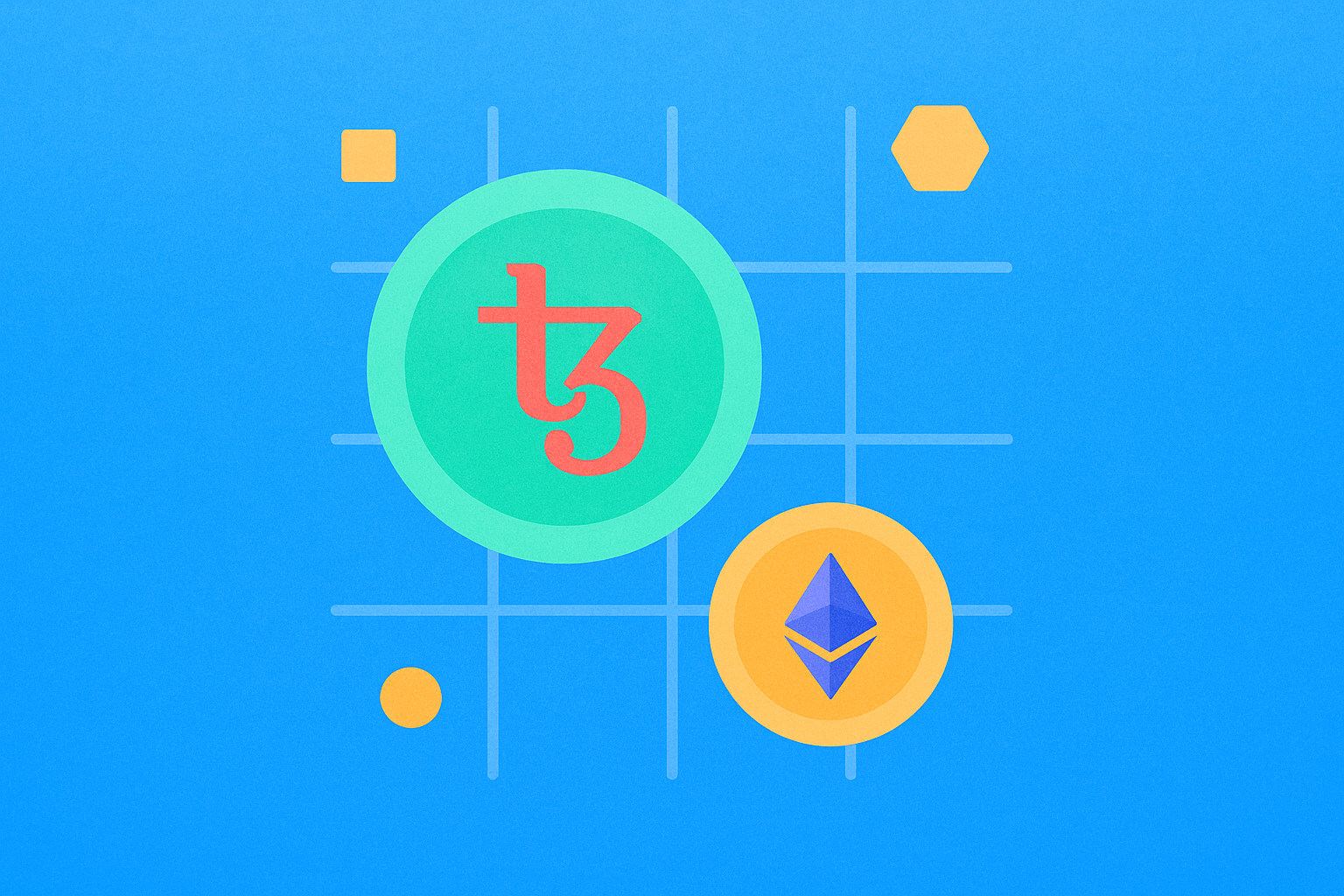
Explore Hic et Nunc, the decentralized NFT platform built on Tezos. Create, buy, and sell NFTs with low fees and rapid transaction speeds. This comprehensive guide is designed for both artists and collectors.
What Is Hic Et Nunc?
The concept of non-fungible tokens (NFTs) has gained significant traction in the crypto space over the past few years. Numerous innovative NFT projects and marketplaces have emerged, most of which are built on the Ethereum platform.
Other blockchains have also seen rapid growth in NFT platforms. Among the most popular NFT marketplaces outside of Ethereum is Hic Et Nunc, an accessible platform that empowers artists and creators to monetize their work on the Tezos blockchain.
Hic Et Nunc (Latin for "Here and Now") is the top NFT marketplace on Tezos and one of the most prominent NFT platforms overall. Its advantages are rooted in Tezos’s technical efficiencies, which deliver exceptional performance compared to other blockchain solutions.
Tezos processes transactions about three times faster than Ethereum. More importantly, transaction fees on Tezos average just $0.02 to $0.03—far lower than Ethereum’s typical fees, which often exceed $40. This major cost difference makes Tezos an attractive option for creators aiming to keep operational expenses low.
Taking advantage of Tezos’s minimal fees, Hic Et Nunc provides creators with a cost-effective NFT platform. Listing an NFT costs roughly 0.05 XTZ, a small fraction of the fees charged by rival platforms. Selling an NFT incurs a 2.5% exchange fee, which Hic Et Nunc uses to fund maintenance and ongoing platform development.
Unlike platforms with strict gatekeeping, Hic Et Nunc allows anyone to list NFTs without approval or pre-qualification. This open approach welcomes both established and emerging creators to the NFT ecosystem. Creative assets linked to NFTs are stored using IPFS (InterPlanetary File System), a decentralized storage solution.
IPFS securely stores assets by assigning each a unique hash identifier. Unlike typical web storage, where items can be changed without impacting their URL, any change to an asset on IPFS generates a new unique hash. This makes IPFS ideally suited for preserving creative works in a tamper-resistant, secure way, ensuring the integrity and authenticity of digital art.
In late 2021, Hic Et Nunc experienced a dramatic shutdown followed by a swift revival under new leadership. This episode highlighted the resilience of decentralized platforms and the strength of the Tezos community.
The platform features its own fungible token, hDAO, used for NFT promotions and governance. hDAO plays a central role in the Hic Et Nunc ecosystem, though its function and value have evolved since launch.
What Is the hDAO Token?
Hic Et Nunc debuted in March 2021 with a native utility and governance token called hDAO. Platform rules set a maximum supply cap of 651,000 hDAO, creating built-in scarcity that could affect long-term token value.
All tokens were distributed within the first two months to NFT buyers and sellers as incentives to use the platform. This initial distribution rewarded early adopters and helped jumpstart marketplace activity at launch.
With no new hDAO supply planned, you can only acquire hDAO from current holders on secondary markets. This hard cap creates unique economic dynamics, with demand met solely by existing holders. hDAO serves two primary roles on Hic Et Nunc:
1. Utility token for NFT promotion: The marketplace features a promotion system where hDAO tokens can elevate your NFT in platform rankings. This increases visibility for creators and attracts more buyers. The more hDAO you invest, the greater your NFT’s exposure.
2. Governance token: hDAO is intended to shape platform rules and strategy. However, while hDAO is described as a governance token, no specific governance mechanisms, rules, or processes were defined or published in the platform’s early stages. Future updates are expected to clarify governance functions, enabling holders to participate actively in key decisions about Hic Et Nunc’s direction.
This dual-purpose makes hDAO a core part of the ecosystem, although its governance potential remains largely untapped and represents a major development opportunity for the platform.
Creators can mint their NFTs on Hic Et Nunc using the FA2 token standard on Tezos. FA2 supports both fungible and non-fungible tokens, providing greater flexibility and interoperability. In contrast, Ethereum uses distinct token standards for each type (ERC-20 for fungible, ERC-721/1155 for NFTs).
Tezos’s unified standard streamlines development and simplifies technical requirements for creators and developers. Here’s how the minting process works on Hic Et Nunc:
1. Use a compatible wallet: Hic Et Nunc recommends Temple and Kukai, but also supports Spire, Galleon, Umami, and AirGap wallets. These wallets offer various features and security levels, so users can select the best fit. Always choose a trusted wallet and safeguard your private keys to protect your assets.
2. Register your OBJKT: Each NFT is called an OBJKT—a term unique to Hic Et Nunc. When registering, you’ll need to provide several key details:
- Detailed description: Add a comprehensive description of your work, including context, inspiration, and information relevant to potential buyers
- Format: Specify file type (image, video, audio, etc.)
- Royalties: If you’re reselling and not the original IP owner, specify the appropriate royalties. This ensures creators benefit from secondary sales
- Upload to IPFS: Upload the asset to secure IPFS storage. There’s a 100 MB limit—adequate for most digital works, though high-resolution video creators may find it restrictive
3. Await confirmation: Minting confirmation typically takes just a few minutes, since Hic Et Nunc doesn’t require asset approval. This rapid turnaround is a major advantage over platforms that may take days or weeks to approve submissions. Once confirmed, you can set a price and list your NFT for sale immediately.
Because NFTs are permanently recorded on the Tezos blockchain, you can’t simply delete a token if you change your mind. Instead, you must burn your NFT. The Hic Et Nunc interface offers a burn function, sending your NFT to a designated burn wallet. While this is the closest equivalent to "deletion," the transaction remains on the blockchain. Burning is irreversible, so proceed with care.
The Hic Et Nunc Shutdown Incident
In late 2021, Hic Et Nunc’s creator, Rafael Lima, unexpectedly announced the immediate closure of the platform, which had grown into one of the NFT sector’s leading marketplaces. The news sent shockwaves through the NFT community and raised critical questions about the viability of decentralized platforms managed by a single developer.
Lima’s reasons for the abrupt shutdown remain unclear, and the lack of explanation fueled speculation. The announcement led to confusion and panic among users worried about losing access to their NFTs and investments. Shortly afterward, blockchain development firm DNS stepped in to revive Hic Et Nunc, doing so quickly and illustrating the resilience of decentralized systems.
DNS’s swift restoration of Hic Et Nunc demonstrates the durability of blockchain platforms. Lima was the "owner" only in the sense of being the principal code contributor. With NFTs stored on Tezos and creative content on IPFS, the decentralized infrastructure persisted independently of Lima’s involvement. This allowed DNS to restore the platform and its operations without major service interruption.
DNS transferred the main marketplace domain from hitetnunc.xyz to hitetnunc.art, appointing original project contributor Joseph Magly to lead the new domain. The domain change also signaled a new chapter for Hic Et Nunc.
Magly worked with Lima on the initial project and took over as coordinator after the transition. He has stated that Lima remains one of the platform’s core contributors, even after stepping back from active management. This continuity reassured many in the community about the legitimacy and stability of the new leadership.
Within days of Lima’s sudden announcement, Hic Et Nunc resumed normal operations. Users could return to creating, buying, and selling NFTs without major disruption. Ultimately, the incident strengthened trust in decentralized infrastructure and showed that robust blockchain platforms can endure, even without their original creators.
Though hDAO has been used on-platform since launch, it was only listed on CoinGecko starting October 2021, and was not yet tracked by CoinMarketCap at that time. This limited visibility on major trackers likely stems from the token’s small market cap and niche role in the cryptocurrency market during its early phase.
Despite Hic Et Nunc’s popularity, its fungible utility and governance token saw limited use beyond the platform and had a relatively low supply. These factors may have curbed wider adoption and market value on secondary exchanges.
From late October to early December 2021, hDAO traded mostly around $10. CoinGecko data showed stable valuation, with daily trading volume near $50,000. This stability suggested confidence among holders, though modest volume pointed to limited liquidity.
Keep in mind these figures reflect a specific period; past performance does not guarantee future results. Cryptocurrency markets are highly volatile, and hDAO’s price can swing dramatically due to factors like platform adoption, Tezos technical developments, and broader NFT market trends.
What Is the Future of Hic Et Nunc?
Hic Et Nunc’s outlook appears strong across several key metrics. The platform remains a leading NFT marketplace—and likely the top choice for Tezos-based NFTs. This leadership is likely to continue thanks to several competitive advantages.
Tezos’s technical strengths will drive future project growth. The blockchain receives regular upgrades that improve speed and functionality, directly benefiting Hic Et Nunc by delivering high-performance, cost-effective infrastructure for creators and collectors.
The platform’s shutdown caused temporary disruption, but the transition from sole management by Rafael Lima to the DNS team will likely bring lasting benefits. A formal governance structure and diverse development team can provide stability and strategic direction that was lacking under individual leadership.
Hic Et Nunc has substantial unrealized potential, and DNS is expected to steer the platform toward growth. For example, although hDAO is meant to be a governance token, few concrete rules have been established or exercised. DNS could add value by building transparent, participatory governance that gives hDAO holders meaningful input into the platform’s future.
Improving the website’s usability and categorizing NFTs more effectively would also help the platform scale. User experience is crucial for attracting and retaining creators and collectors. Better navigation, discovery, and search tools could boost engagement. As a team-based entity, DNS is well positioned to deliver these necessary upgrades.
What first seemed like a fatal setback may prove to be a turning point for Hic Et Nunc and its community. Transitioning to collective, professional governance could unlock the platform’s full potential and cement its leadership in the Tezos NFT ecosystem.
The broader NFT ecosystem continues to expand, with applications growing beyond digital art to music, gaming, virtual collectibles, and even real estate and digital identity. With its cost structure and robust technical foundations, Hic Et Nunc is well placed to benefit from the sector’s ongoing growth.
FAQ
What is Hic Et Nunc and what is its role in the Tezos ecosystem?
Hic Et Nunc was the top NFT platform on Tezos, hosting over 500,000 NFTs. It served as a major hub for digital content creators and generative art, making a historic impact on Tezos’s NFT landscape before its shutdown.
Connect your Tezos wallet (for example, Temple Wallet or Kukai Wallet) to Hic Et Nunc, then use the minting feature to create and issue your NFTs directly on the platform.
What fees apply when trading NFTs on Hic Et Nunc?
On Hic Et Nunc, transaction fees are paid in Tezos (XTZ). The platform charges fees that vary based on transaction size, and fees are deducted at the time of settlement.
How does Hic Et Nunc differ from other NFT marketplaces?
Hic Et Nunc runs on Tezos, offering lower transaction fees and superior energy efficiency. Its focus is on digital art and a distinctive community-driven experience that sets it apart from competitors.
Is Hic Et Nunc secure? What risks should users consider?
Hic Et Nunc is built on the Tezos blockchain, which provides strong security. Key risks include smart contract vulnerabilities, market volatility, and user error. It’s important to keep your private keys safe and avoid high-risk investments.
Tezos delivers lower transaction fees, greater energy efficiency, and better scalability than Ethereum. Hic Et Nunc leverages these benefits to provide faster, cheaper, and more sustainable NFT transactions, greatly enhancing the user experience.
Go to your collection, select the NFT you wish to sell, and click the sale option. Set your price and confirm your listing. Other users can then purchase your NFT. To buy, browse the marketplace, choose an NFT, and complete the transaction.
What is Hic Et Nunc’s trading volume and user base?
Hic Et Nunc continues to grow in 2026, reaching a 20% market share. Its user base is expanding rapidly and attracting more investors. Recent data shows a notable increase in trading activity.
* The information is not intended to be and does not constitute financial advice or any other recommendation of any sort offered or endorsed by Gate.